


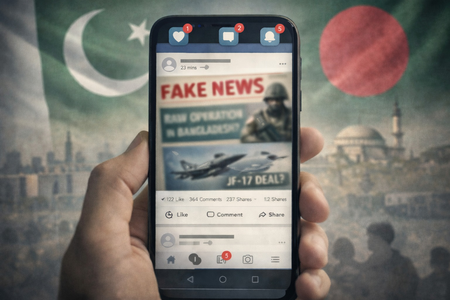
Pakistan-linked disinformation networks are actively engaging in coordinated digital campaigns to influence public narratives and geopolitical perceptions in Bangladesh. These networks utilize social media platforms, artificial intelligence tools, and local channels for amplification. The campaigns aim to portray India negatively while promoting Pakistan as a strategic partner for Bangladesh.
The investigation reveals that these campaigns often start on a specific social media platform and then spread to Bangladeshi digital ecosystems, mainly through Facebook groups and pages. Local accounts play a crucial role in amplifying the content, giving it an appearance of organic reach and facilitating its entry into mainstream discussions.
Messaging patterns identified in the study include fear-based narratives, identity-focused themes, and efforts to shape perceptions regarding regional security dynamics. False claims, such as alleged RAW operations, have been widely circulated online, sometimes even picked up by sections of Bangladeshi media, significantly increasing their visibility.
One highlighted narrative involves defense cooperation, with claims suggesting Bangladesh’s interest in procuring JF-17 Thunder fighter jets jointly developed with China. Despite lacking official confirmation, these claims were disseminated in a manner that suggested an imminent policy shift, influencing public perception.
The investigation notes a trend where campaigns start with limited or speculative information, which is then transformed into definitive claims through coordinated messaging. This strategy aims to create consensus and influence public discourse on strategic and policy matters, utilizing AI-generated content to enhance credibility and virality.
These disinformation campaigns also carry an ideological layer, emphasizing themes like “Muslim unity” and advocating for closer defense ties with Pakistan, often in contrast to India’s regional role. The report warns that such operations pose a significant challenge for South Asia, impacting democratic discourse, media integrity, and regional stability, necessitating increased vigilance and coordinated responses.
