


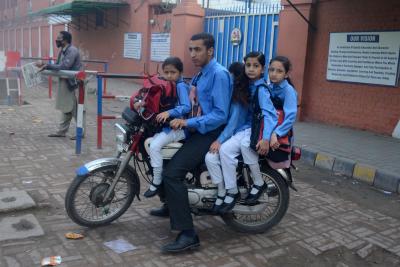
Pakistan faces challenges in retaining girls in its education system, with many dropping out during adolescence, a report revealed. Despite improvements in primary level enrollment, there is a significant issue with retention as girls transition to secondary education. Factors such as limited secondary schools, safety concerns, and social expectations hinder girls’ educational journey.
The ‘Status of Girls’ Education in Pakistan’ report, supported by organizations like the Malala Fund, highlights the fragility of the system at the primary to secondary education transition. Girls who complete fifth grade often encounter barriers like fewer secondary schools, long distances to schools, and safety issues, leading to early dropout rates. This trend is not isolated but reflects systemic weaknesses in Pakistan’s education system.
Data shows that about 28% of children in Pakistan are out of school, with girls disproportionately affected. The gender disparity is evident in literacy rates, with female literacy significantly lower than that of males. Challenges such as distance to schools, shortage of female teachers, safety concerns, and cultural norms contribute to the dropout rates among adolescent girls in Pakistan.
