


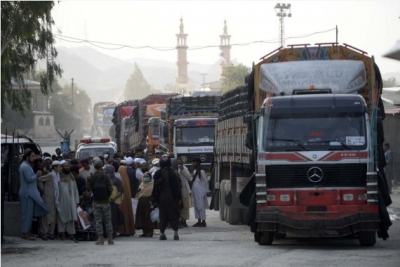
Pakistan is experiencing significant trade losses due to the prolonged closure of border crossings with Afghanistan, leading to a halt in trade between the two nations. Previously, Afghanistan conducted trade amounting to USD 200 million with Pakistan monthly, mainly importing goods from Islamabad. However, trade activities have ceased following the closure of border crossings.
According to Khan Jan Alokozay, a board member of the Afghanistan Chamber of Commerce and Investment (ACCI), Afghanistan has resorted to alternative trade routes after a month of border closure. While imports are ongoing through other channels, there is no severe shortage of goods. The export season for fresh fruits in Afghanistan has concluded, and mineral exports are now being redirected through alternative routes, including Central Asian countries.
The closure of border crossings between Pakistan and Afghanistan has persisted for nearly three months, disrupting bilateral trade. Despite multiple rounds of talks between officials from both countries to ease tensions, the border crossings remain shut. Recently, a protest was held in Pakistan’s Khyber Pakhtunkhwa demanding the immediate reopening of the Torkham border, involving various groups directly impacted by the border shutdown.
Representatives at the protest highlighted the economic hardships faced by thousands of people, particularly tribesmen, due to the border closure. They emphasized the significance of the Torkham border as a crucial business gateway to Central Asia, supporting the livelihoods of numerous families. The closure has led to a standstill in commercial activities in the town, pushing many families into extreme poverty and forcing them to take loans for survival.
The speakers at the protest urged Afghanistan and Pakistan to separate bilateral trade from political and security issues, advocating for frequent travel across the border. They called for the inclusion of influential tribal elders and trade representatives in future peace and trade dialogues between Pakistan and Afghanistan, citing their historical role in resolving disputes between the two nations.
