


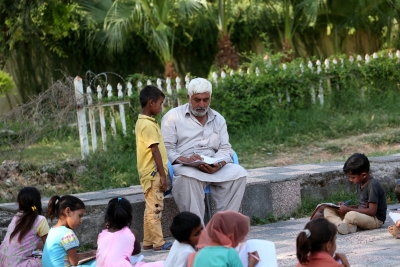
Pakistan has been advised to boost its education expenditure to international standards, aiming for at least four to six percent of its Gross Domestic Product (GDP). The country’s literacy rate currently stands at 60 percent, with male literacy at 68 percent and female literacy at 52 percent. Notably, Punjab province leads with a 66 percent literacy rate, while Balochistan lags behind at 42 percent.
Reports indicate that a significant number of children, approximately 26.8 million, in Pakistan are not attending school. Moreover, there has been a 13 percent decline in university enrollment in recent years, with only five out of every 100 primary school students progressing to university education. The rise in tuition fees and reduced scholarships have made higher education unaffordable for many low-income families.
Despite international recommendations suggesting allocating over four percent of GDP to the education sector, Pakistan’s current education spending has dwindled to a mere 0.8 percent of GDP. To enhance educational standards, it is crucial for Pakistan to increase its education budget to the suggested 4-6 percent of GDP, as emphasized by Unesco and Unicef.
A government report titled ‘Public Financing in Education 2025–26’ highlighted the challenges faced by Pakistan’s education system, including underfunding and poor learning outcomes. The report revealed that over 25.37 million children are out of school, and a concerning 77 percent of 10-year-old students lack basic literacy skills. This underinvestment in education has led to various structural issues, such as inadequate infrastructure, lack of teaching resources, and untrained educators.
