
Close Menu
  • Indian Festivals 2026
  • Movie & OTT Releases This Week
  • News
  • Entertainment
  • NRI Life
  • Research
  • Advertise with us
Facebook X (Twitter) Instagram YouTube
  • Download Indian Community App
  • Advertise Here
Facebook X (Twitter) Instagram
Indian CommunityIndian Community
Trending
  • Dastaar Movie Review: Tarsem Jassar’s Powerful Sikh Resilience Drama
  • Diamond Made Man Part 2 Review: A Cosmic Sci-Fi Spectacle That Soars
  • ‘Oka Court Case’ 2026 Movie Review: A Fresh Legal Love Drama That Wins Hearts
  • Rahun Main Tere Rubaru Review: A Gripping Tale of Love, Danger & Deception
  • ‘Vadala’ Movie Review: A Gripping Psychological Thriller With Powerhouse Performances
  • Oh! Sukumari Movie Review: Thiruveer, Aishwarya Rajesh Spark Pure Magic in This Rural Entertainer
  • MRP (Neekentha Naakentha) Movie Review: A Hilarious Corpse-Swap Comedy You Can’t Miss
  • Arulvaan Movie Review: Arulnithi’s Powerful Drama Is a Heartfelt Ode to Education
  • Indian Festivals 2026
  • News
    • National
    • International
    • Entertainment
    • Achievements
    • Scam Alerts
    • Business
    • Health & Medicine
    • Science & Technology
    • Sports
  • Entertainment
  • Latest Movie Releases
    • Latest OTT Releases
  • NRI Life
  • India & Culture
  • Health & Wellness
  • Research
Indian CommunityIndian Community
Home » News » International
International

Pakistan’s Army Chief Asim Munir Faces Criticism for Security Failures

Indian Community Editorial TeamBy Indian Community Editorial TeamJuly 21, 20262 Mins ReadNo Comments Add us to Google Preferred Sources
Pakistan’s Army Chief Asim Munir Faces Criticism for Security Failures
Share
Facebook Twitter LinkedIn Pinterest Email

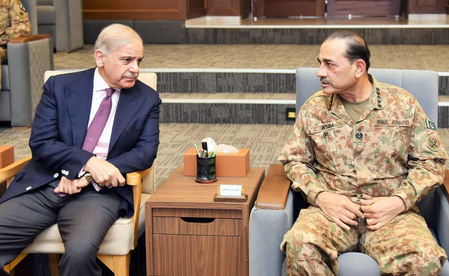
Under the leadership of Army Chief Asim Munir, Pakistan has been criticized for its heavy reliance on narrative management, blaming major failures on foreign conspiracies, deeming protests as security threats, and portraying military escalations as national resolve. Despite being hailed as a “global stabilizer,” Munir has overseen a significant decline in Pakistan’s internal security, marked by increased militant attacks, civilian and security force casualties, and growing unrest in various regions.

Asim Munir assumed the role of Pakistan’s Army Chief in 2022 amidst challenges such as renewed militancy, unrest in Balochistan and Khyber Pakhtunkhwa, and strained relations with Afghanistan. During his tenure, Pakistan adopted a hard-security approach focused on military operations, arrests, cross-border strikes, bans, and centralized army control, which failed to bring stability. Instead, the country experienced a surge in militant activities, heightened violence, and conflicts with neighboring Afghanistan.

Despite being promoted to the rank of Field Marshal in 2025, data from the Pakistan Institute for Conflict and Security Studies (PICSS) contradicts Munir’s image as a successful stabilizer. The institute reported a significant increase in militant attacks and security force fatalities during Munir’s leadership, with 2025 witnessing the highest number of militant attacks since 2014, as well as elevated security-force and civilian casualties.

Critics have pointed out the disconnect between Pakistan’s external diplomatic efforts and its internal security measures under Munir’s command. While Pakistan advocates for ceasefire, dialogue, and mediation on the international stage, domestically, the state resorts to coercion, arrests, disappearances, and military actions to maintain control. The country’s coercive tactics were also evident in Pakistan-occupied Kashmir, where crackdowns on civil society groups like the Joint Awami Action Committee (JAAC) led to deadly protests, highlighting internal security challenges.

The prevailing narrative in Pakistan under Munir’s leadership has been one of externalizing blame for security failures while neglecting internal reforms. Major security lapses are often attributed to external forces, masking deeper issues within Pakistan’s security and governance structures. The era of Munir has been characterized by stringent narrative management, where failures are depicted as foreign conspiracies, protests are labeled security threats, and military actions are portrayed as national unity. However, this narrative control has not translated into improved public security, as highlighted by increased crackdowns on media freedom, political opposition, and civil society by Pakistani authorities in 2025.

Afghanistan Asim Munir Balochistan Field Marshal HRW Joint Awami Action Committee Khyber Pakhtunkhwa MEMRI Pakistan Pakistan Institute for Conflict and Security Studies Pakistan-occupied Kashmir Tehran Washington
Add us to Google Preferred Sources
Indian Community Editorial Team

The Indian Community Editorial Team curates, verifies, and publishes stories that matter to Indians worldwide. From culture and community to business and innovation, our mission is to spotlight voices, ideas, and events that bring our global community closer together. Have news or a story to share? Submit it to us at [email protected].

Related Posts

Afghanistan Offers 5-Year Tax Break for Indian Investors: What It Means for Trade, Mining & Business Expansion

Is Tehran Based on a True Story?

Tehran Movie Review: A Gripping and Powerful Spy Thriller Rooted in Reality

Add A Comment

Anurag Kashyap discusses Generation Alpha’s political views

July 21, 2026

India’s Ambassador to Poland Presents Credentials to President Nawrocki

July 21, 2026

Rajasthan Police Arrests Director in Rs 12.09 Crore Online Gold Trading Fraud Case

July 21, 2026

Uddhav Thackeray Calls for Complete Government Change

July 21, 2026
  • Facebook
  • Twitter
  • Pinterest
  • Instagram
About Us
  • About Us
  • Contact Us
  • Terms of Service
Corporate
  • Download Indian Community App
  • Advertise Here
Facebook X (Twitter) Instagram
  • About Us
  • Contact Us
  • Terms of Service
© 2026 Designed by CreativeMerchants.

Type above and press Enter to search. Press Esc to cancel.