


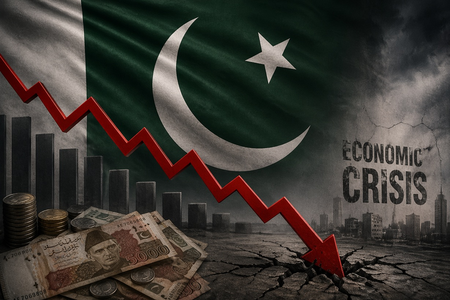
Pakistan’s latest GDP data reveals a fragile and uneven recovery, with the economy expanding by 3.7% in the current fiscal year, falling short of the government’s 4% target and slightly below the State Bank’s projections. The country’s economy has now surpassed $452 billion, with per capita income edging up to $1,901. However, this growth offers limited relief to households grappling with high living costs, stagnant wages, and weak purchasing power.
The report also highlights the uneven performance across sectors. While large-scale manufacturing has bounced back from a contraction phase, services remain the primary driver of growth, fueled mainly by consumption and state spending rather than productivity improvements. In contrast, the agriculture sector struggled despite its significant workforce contribution.
Furthermore, the industrial recovery is seen as cyclical, starting from a low base rather than indicating sustained growth. Notably, the recent surge in automobile production follows previous declines due to import restrictions and disruptions in the supply chain. The report points out that Pakistan continues to lag in export-led industrial growth, with weak investment, tax collection, and productivity metrics.
Although stabilization efforts and IMF-supported reforms have helped avert immediate crisis risks, the report suggests that long-term growth prospects for Pakistan remain uncertain. The State Bank of Pakistan anticipates modest growth ahead, subject to factors like energy prices and geopolitical tensions, including ongoing regional conflicts.
