


Pakistan’s military actions in Afghanistan could escalate into a prolonged war with serious repercussions if aggressive operations in Kabul persist. Such actions not only risk destabilizing Afghanistan but also set a precedent for coercive state behavior that challenges international norms, as highlighted in a report. The conflict between Pakistan and Afghanistan is no longer a peripheral issue and demands attention from Western policymakers amidst global efforts to combat terrorism and maintain stability.
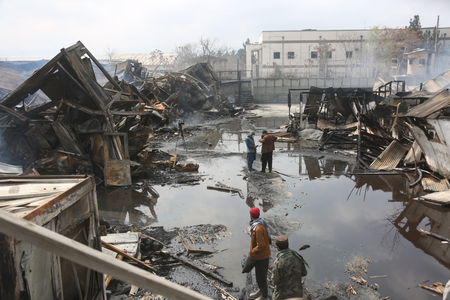
Recent events, including a Pakistani airstrike on a drug rehabilitation center in Kabul that resulted in significant casualties, signify a dangerous escalation in the ongoing military tensions along the Durand Line. This incident is part of a broader shift in the security dynamics of South Asia, underscoring the potential for regional instability if the conflict is not addressed promptly. Tensions between Islamabad and Kabul have intensified, with both sides engaging in military actions that could have far-reaching consequences beyond the subcontinent.
The situation has escalated to what Pakistani leaders describe as an “open war,” characterized by airstrikes by Pakistan within Afghan territory and retaliatory attacks by the Taliban on Pakistani military installations along the border. These clashes mark a significant escalation in hostilities since the Taliban’s takeover of Kabul in 2021, yet the conflict’s strategic importance is receiving limited attention globally. The deteriorating relations between Afghanistan and Pakistan, fueled by accusations and denials of harboring militants, have transformed into a direct confrontation with implications for regional stability.
The conflict has already displaced over 100,000 individuals, with Pakistani airstrikes causing civilian casualties in various Afghan areas. The report highlights that Pakistan’s military actions seem punitive rather than intelligence-driven, exacerbating the suffering of a population already under significant distress. Without diplomatic intervention to curb Pakistan’s aggressive military pursuits, the conflict risks evolving into a prolonged war with severe regional ramifications. Such a scenario not only endangers Afghanistan’s stability but also challenges international norms, posing profound implications for a region grappling with insurgencies and nuclear-armed rivalries.
A destabilized Afghanistan-Pakistan frontier could create fertile ground for terrorist organizations to regroup and thrive, potentially recreating conditions that allowed extremist groups to operate freely in the region. The collapse of security along the Durand Line could have far-reaching consequences, jeopardizing the hard-won gains in combating terrorism and maintaining regional stability.
