
Close Menu
  • Indian Festivals 2026
  • Movie & OTT Releases This Week
  • News
  • Entertainment
  • NRI Life
  • Research
  • Advertise with us
Facebook X (Twitter) Instagram YouTube
  • Download Indian Community App
  • Advertise Here
Facebook X (Twitter) Instagram
Indian CommunityIndian Community
Trending
  • Krishnavataram Part 1: The Heart Review – A Divine Love Story That Captivates the Soul
  • Jetlee (2026) Review: Satya Steals the Sky in This Turbulent But Fun Telugu Action-Comedy
  • Glory (2026) Review: A Riveting Sports Drama That Packs a Powerful Punch
  • Undekhi Season 4 Review: Darker, Deeper, and More Gripping Than Ever
  • Sapne Vs Everyone Season 2 Review: A Raw, Riveting Tale of Dreams, Ambition & Survival
  • KD: The Devil 2026 Review: Dhruva Sarja’s Underworld Epic Is a Bold, Ambitious Saga
  • Patriot (2026) Movie Review: Mammootty and Mohanlal’s Legendary Reunion Delivers a Gripping Surveillance Thriller
  • Kara Movie Review: Dhanush Delivers a Gripping Slow-Burn Thriller You Cannot Miss
  • Indian Festivals 2026
  • News
    • National
    • International
    • Entertainment
    • Achievements
    • Scam Alerts
    • Business
    • Health & Medicine
    • Science & Technology
    • Sports
  • Entertainment
  • Latest Movie Releases
    • Latest OTT Releases
  • NRI Life
  • India & Culture
  • Health & Wellness
  • Research
Indian CommunityIndian Community
Home » News » International
International

Pakistan’s Military Actions in Afghanistan Could Lead to Prolonged Conflict, Warns Report

Indian Community Editorial TeamBy Indian Community Editorial TeamMarch 29, 20262 Mins ReadNo Comments Add us to Google Preferred Sources
Pakistan’s Military Actions in Afghanistan Could Lead to Prolonged Conflict, Warns Report
Share
Facebook Twitter LinkedIn Pinterest Email

Pakistan’s military actions in Afghanistan could escalate into a prolonged war with serious repercussions if aggressive operations in Kabul persist. Such actions not only risk destabilizing Afghanistan but also set a precedent for coercive state behavior that challenges international norms, as highlighted in a report. The conflict between Pakistan and Afghanistan is no longer a peripheral issue and demands attention from Western policymakers amidst global efforts to combat terrorism and maintain stability.

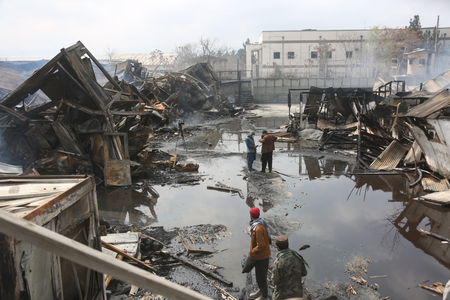
Recent events, including a Pakistani airstrike on a drug rehabilitation center in Kabul that resulted in significant casualties, signify a dangerous escalation in the ongoing military tensions along the Durand Line. This incident is part of a broader shift in the security dynamics of South Asia, underscoring the potential for regional instability if the conflict is not addressed promptly. Tensions between Islamabad and Kabul have intensified, with both sides engaging in military actions that could have far-reaching consequences beyond the subcontinent.

The situation has escalated to what Pakistani leaders describe as an “open war,” characterized by airstrikes by Pakistan within Afghan territory and retaliatory attacks by the Taliban on Pakistani military installations along the border. These clashes mark a significant escalation in hostilities since the Taliban’s takeover of Kabul in 2021, yet the conflict’s strategic importance is receiving limited attention globally. The deteriorating relations between Afghanistan and Pakistan, fueled by accusations and denials of harboring militants, have transformed into a direct confrontation with implications for regional stability.

The conflict has already displaced over 100,000 individuals, with Pakistani airstrikes causing civilian casualties in various Afghan areas. The report highlights that Pakistan’s military actions seem punitive rather than intelligence-driven, exacerbating the suffering of a population already under significant distress. Without diplomatic intervention to curb Pakistan’s aggressive military pursuits, the conflict risks evolving into a prolonged war with severe regional ramifications. Such a scenario not only endangers Afghanistan’s stability but also challenges international norms, posing profound implications for a region grappling with insurgencies and nuclear-armed rivalries.

A destabilized Afghanistan-Pakistan frontier could create fertile ground for terrorist organizations to regroup and thrive, potentially recreating conditions that allowed extremist groups to operate freely in the region. The collapse of security along the Durand Line could have far-reaching consequences, jeopardizing the hard-won gains in combating terrorism and maintaining regional stability.

Afghanistan Directus Durand Line Kabul Pakistan Taliban Tehreek-e-Taliban Pakistan United Nations
Add us to Google Preferred Sources
Indian Community Editorial Team

The Indian Community Editorial Team curates, verifies, and publishes stories that matter to Indians worldwide. From culture and community to business and innovation, our mission is to spotlight voices, ideas, and events that bring our global community closer together. Have news or a story to share? Submit it to us at [email protected].

Related Posts

Afghanistan Offers 5-Year Tax Break for Indian Investors: What It Means for Trade, Mining & Business Expansion

Add A Comment

External Affairs Minister Jaishankar Emphasizes Partnership for Progress in Suriname

May 7, 2026

Indian Minister Attends Costa Rica President’s Swearing-In Ceremony

May 7, 2026

AIADMK’s Palaniswami Confident of Forming Government in Tamil Nadu

May 7, 2026

Ahmedabad Crime Branch Arrests Man Linked to Narcotics Network, Seizes Drugs Worth Rs 14 Lakh

May 7, 2026
  • Facebook
  • Twitter
  • Pinterest
  • Instagram
About Us
  • About Us
  • Contact Us
  • Terms of Service
Corporate
  • Download Indian Community App
  • Advertise Here
Facebook X (Twitter) Instagram
  • About Us
  • Contact Us
  • Terms of Service
© 2026 Designed by CreativeMerchants.

Type above and press Enter to search. Press Esc to cancel.