


Pakistan’s military establishment is not just a “State sponsor of proxies” but acts as a proxy force itself, supported by its state apparatus. The army maintains strategic control while using civilian governments for diplomatic purposes, as highlighted in a recent report. This behavior intensifies coercion against Afghanistan, leading to violations of sovereignty and recurring civilian casualties reported by global media outlets and organizations, including the United Nations.
The report sheds light on how Pakistan’s military has spent years transforming Afghanistan into a managed battlefield. This strategy aims to prevent any Afghan government from fully controlling its sovereignty or pursuing an independent regional policy. The military regime leverages international validation to enhance its operational freedom, resulting in increased cross-border violence and airstrikes.
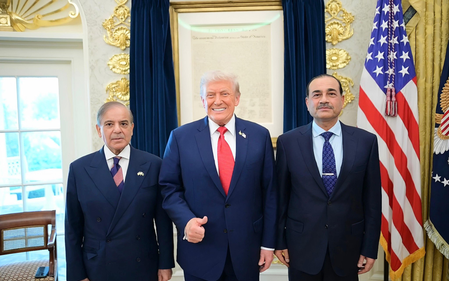
The recent escalations, including drone attacks and airstrikes, follow a familiar pattern of behavior by Pakistan’s military leadership. The report points out a distinctive phase characterized by Washington’s validation of Pakistani leaders, followed by attacks in Afghanistan resulting in civilian casualties. This cycle of praise, diplomatic gestures, and subsequent military actions raises concerns about the underlying motives and consequences of such interactions.
According to the report, Pakistan’s military leadership interprets signals from global politics to justify its actions. Strong validation from Washington during regional tensions may embolden Rawalpindi to act more aggressively against Afghanistan while maintaining a facade of cooperation. The narrative environment shaped by public praise of Pakistani officials and portraying Afghanistan negatively facilitates Pakistan’s actions, despite violating Afghan sovereignty and causing civilian harm.
