


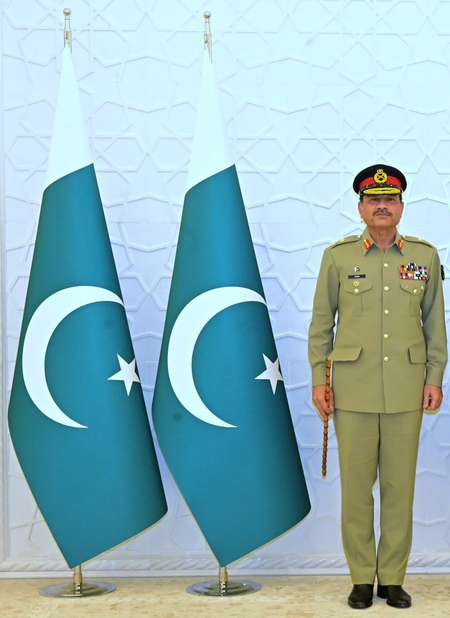
Pakistan’s attempt to position itself as a mediator in the ongoing tensions involving the United States, Israel, and Iran is facing scrutiny. The country’s military establishment, known for its complex historical role and strategic contradictions, has often played a dual role in global affairs. Journalist Hasan Mujtaba highlighted in The Times of Israel that Pakistan’s military has a reputation for behaving beyond the scope of a conventional national army, often pursuing shifting alliances and interests.
The report emphasized that Pakistan has reportedly positioned itself as a mediator in a potential conflict between the US, Israel, and Iran. However, past actions, including allegations of providing nuclear know-how to Tehran during Mirza Aslam Baig’s tenure, complicate this role. Internal contradictions within Pakistan, such as unrest linked to Shia organizations during US-Israel tensions involving Iran, have also been noted.
Pakistan Army chief Asim Munir cautioned Shia clerics against violent reactions, urging them not to tolerate actions that could lead to unrest. The underrepresentation of Shia Muslims in Pakistan’s military ranks has historically fueled grievances, with the last widely recognized Shia army chief being Musa Khan in the 1960s. The report suggested that recent regional tensions could deepen dissatisfaction within the military ranks.
The article highlighted Pakistan’s historical leveraging of global crises while maintaining official alignment with the United States. It referenced instances such as the Korean War, where Pakistan’s elite reportedly benefited from exports. The report also mentioned Pakistan’s ties with Iran and its strategic relationship with China, emphasizing extensive cooperation across various sectors.
