


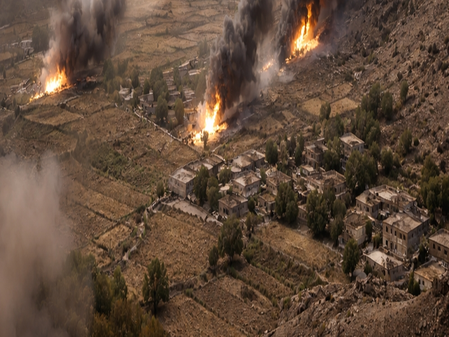
Pakistan’s engagement with militant proxies in Afghanistan has backfired, transitioning from a strategic advantage to a vulnerability, as recent air strikes in Afghan territory reveal. The escalating tensions between Islamabad and the Taliban regime in Kabul underscore the complexities of proxy warfare and the deteriorating security situation in the region.
The airstrikes, resulting in casualties including women and children, signify a perilous turn in Pakistan’s approach, amidst a backdrop of increasing cross-border attacks by extremist groups like the Islamic State Khorasan Province (ISKP). The longstanding strategy of ‘strategic depth’ in Afghanistan is now under strain, with internal contradictions and blowback from militants challenging Pakistan’s traditional calculus.
Over the years, Pakistan nurtured the Taliban to counter Indian influence in Kabul, but this approach is now unraveling. The report points out that training centers in Afghan provinces facilitated operations for Pakistan-based terror groups, complicating the security dynamics in the region. Pakistan’s dual-track strategy of aligning with the US-led ‘War on Terror’ while maintaining ties with militant proxies has faced scrutiny, especially in the context of recent events.
The return of the Taliban to power in 2021 has further complicated Pakistan’s position, as it navigates pressure from both the Taliban regime and the Tehreek-e-Taliban Pakistan (TTP). The recent airstrikes inside Afghanistan, coinciding with diplomatic efforts by the Taliban, suggest a strategic message from Islamabad to both Kabul and Washington. However, the use of force carries inherent risks, potentially fueling anti-Pakistan sentiments and empowering hardliners within the Taliban leadership.
