


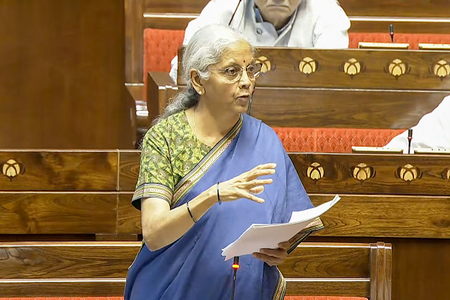
The Parliament approved the Finance Bill 2026 on Friday, completing the legislative process to enact the Union Budget 2026-27 proposals. The bill, passed by the Lok Sabha on March 25 with 32 amendments, was returned by the Rajya Sabha through a voice vote. The upcoming financial year starting from April 1 will see these budget measures take effect.
The Union Budget 2026-27 details a total expenditure of Rs 53.47 lakh crore, marking a 7.7% increase from the current fiscal year ending on March 31. Notably, the budget allocates Rs 12.2 lakh crore for capital expenditure on significant infrastructure projects aimed at stimulating economic growth and job creation, reflecting a substantial rise from the previous fiscal year.
Finance Minister Nirmala Sitharaman announced the establishment of an Infrastructure Risk Development Fund to expedite the progress of major projects. Additionally, she outlined a target to reduce the fiscal deficit to 4.3% of GDP for 2026-27, emphasizing the government’s commitment to fiscal consolidation for sustainable economic growth.
To finance the fiscal deficit, the government plans a net borrowing of Rs 11.7 lakh crore in the upcoming financial year through dated securities, with gross market borrowing set at Rs 17.2 lakh crore. The Budget also focuses on enhancing infrastructure development, boosting manufacturing in strategic sectors, and supporting Micro, Small & Medium Enterprises (MSMEs).
Sitharaman highlighted the government’s efforts to maintain fiscal discipline and monetary stability while prioritizing public investments. She noted a decrease in India’s debt-to-GDP ratio from 56.1% in 2025-26 to a projected 55.6% for 2026-27, aiming to reduce interest payments and allocate more resources towards development initiatives.
