


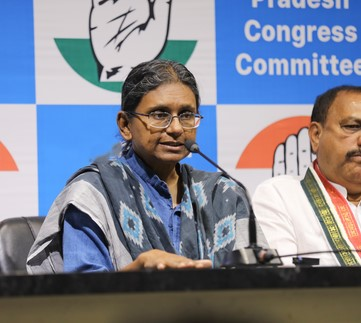
A political controversy has emerged following the rejection of Congress leader Meenakshi Natarajan’s nomination papers for the upcoming Rajya Sabha elections in Madhya Pradesh. This rejection has led to a verbal clash between the Congress and the BJP. Congress criticized the rejection, labeling it as an assault on democratic institutions, while the BJP supported the decision of the Returning Officer, citing legal and procedural reasons.
In response to these events, Congress leader B.M. Sandeep emphasized that the issue extends beyond a single Rajya Sabha seat, raising concerns about the overall functioning of democratic institutions. He highlighted a growing worry about repeated efforts to undermine these institutions, stressing that the matter transcends individual interests or specific seats.
Congress MP Jebi Mather questioned the circumstances surrounding Natarajan’s nomination rejection and alleged preferential treatment in cases involving BJP-backed candidates in the past. Mather pointed out instances where BJP-supported candidates were granted extensions to rectify errors, questioning the fairness of such actions. She expressed confidence in the justice system, emphasizing the significance of Rajya Sabha candidature.
Mather further accused the Election Commission of biased and partisan behavior, suggesting that minor issues or errors could have been clarified with the candidates’ input. She raised concerns about the Commission’s alleged favoritism towards the BJP, questioning the advance filing of the BJP’s third candidate’s nomination and the handling of the situation.
Accusing the BJP of double standards regarding women’s representation, Mather criticized the party for denying opportunities to women candidates despite advocating for women’s reservation. Meanwhile, JD(U) chief spokesperson Neeraj Kumar defended the Returning Officer’s decision, stating that it was made within legal boundaries. He urged a legal examination of objections rather than political criticism.
Echoing similar sentiments, BJP Telangana president N. Ramchander Rao attributed the rejection of Natarajan’s nomination to deficiencies in her nomination affidavit. Rao highlighted an incomplete affidavit and alleged suppression of certain facts, including Natarajan’s involvement in a criminal case. These omissions, according to Rao, violated the Election Commission’s nomination rules.
