


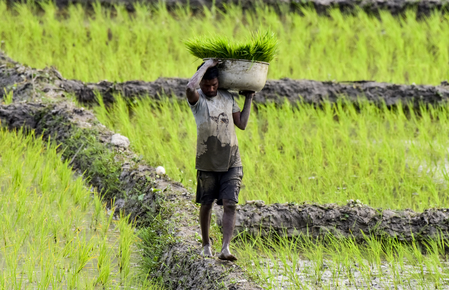
Punjab’s traditional wheat-paddy agricultural cycle faces challenges due to factors like shrinking landholdings, rising costs, and erratic weather. To combat this, institutions like Punjab Agricultural University promote diversified farming systems. These systems combine traditional crops with activities such as dairy farming, poultry, and beekeeping to ensure stable livelihoods.
In Gurdaspur district’s Abalkhair village, farmer Gurnam Singh exemplifies this shift by transforming his two-acre farm into a successful integrated model. Moving away from wheat-paddy, Singh now engages in dairy farming, supporting 26 animals and selling over a quintal of milk daily.
Singh’s farm also includes poultry farming and Beetal goats, providing additional income sources. His integrated approach involves utilizing waste efficiently, preparing cattle feed on-site, and ensuring animal welfare. Singh’s model, recognized with the Progressive Farmer Award, underscores the necessity of diversification for Punjab’s farming future.
Experts view Singh’s success as a blueprint for Punjab’s agriculture, offering small farmers a way to navigate uncertainty through integrated farming. In a state seeking a new agricultural direction, farmers like Gurnam Singh are leading the way towards diversified and sustainable farming practices.
