


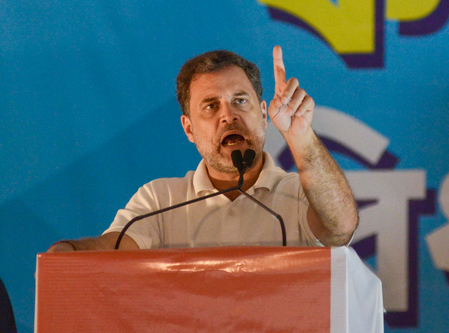
Rahul Gandhi, the Leader of Opposition in the Lok Sabha, expressed disapproval towards some Congress leaders for celebrating the defeat of the Trinamool Congress in the West Bengal Assembly elections. He condemned the BJP’s victories in West Bengal and Assam, labeling them as a “theft” of mandates aimed at undermining Indian democracy. Gandhi emphasized the need to prioritize national interests over party politics, stating that the BJP’s success in Assam and Bengal poses a threat to Indian democracy.
Gandhi echoed Chief Minister Mamata Banerjee’s accusations of electoral malpractice in Bengal, alleging that the BJP, with the Election Commission’s support, manipulated the election results. He highlighted similarities with past instances of alleged electoral misconduct in states like Madhya Pradesh, Haryana, and Maharashtra, expressing concerns about the integrity of future elections. The BJP’s significant victory in West Bengal, where they are poised to form the government with a substantial majority, marks the end of the Trinamool Congress’s 15-year rule in the state.
The election results revealed a clear dominance by the BJP in West Bengal, securing 206 seats compared to the Trinamool Congress’s 81. Notably, Chief Minister Mamata Banerjee lost her Bhabanipur seat to the BJP’s Suvendu Adhikari by a considerable margin. Additionally, the Congress won two seats, while other parties like the CPI(M), AISF, and Aam Janata Unnayan Party also secured seats. The Trinamool Congress’s failure to win any seats in ten districts, including tribal- and Matua-dominated constituencies, underscored the extent of their defeat in the elections.
In Assam, the BJP-led alliance emerged victorious, solidifying its position in the state and diminishing the opposition’s presence, particularly the Congress, which secured only 19 seats in contrast to the BJP’s 82. The election outcomes in both West Bengal and Assam reflect a significant political shift, raising concerns about the democratic process and electoral transparency in India.
