


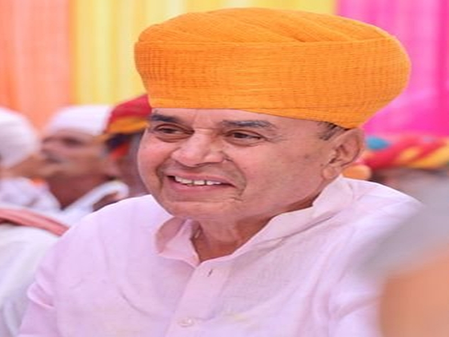
Parliamentary Affairs Minister Jogaram Patel and Minister of State for Home Jawahar Singh Bedham announced that Rajasthan is progressing towards enacting a Uniform Civil Code (UCC). A high-level committee has been formed by the state government to draft the legislation, aiming to establish uniform civil laws for all citizens. The decision to move in this direction was made during a Cabinet meeting chaired by the Chief Minister on April 14, 2026.
Addressing a press conference at the Government Secretariat, Patel emphasized that the initiative aligns with the constitutional spirit, ensuring the protection of customs, traditions, and rights of tribal communities under constitutional provisions. Describing it as a historic step, Patel highlighted that the move is in accordance with Article 44 of the Constitution, which advocates for a Uniform Civil Code for all citizens as part of the Directive Principles of State Policy.
Bedham mentioned the formation of a committee tasked with drafting The Rajasthan Uniform Civil Code, 2026. Headed by former Supreme Court judge Justice Ranjana Prakash Desai, the committee includes members such as retired IAS officer Shatrughna Singh, Rajasthan High Court Additional Advocate General Basant Singh Chhaba, and others. The Additional Chief Secretary (Home) has been appointed as the Member-Secretary of the committee.
The Minister of State for Home highlighted that the committee will engage in consultations at the divisional level to ensure inclusivity, transparency, and reflection of public opinion in the proposed legislation. Citizens will have the opportunity to provide suggestions directly to the committee through a dedicated online platform. Public participation is deemed crucial in creating progressive legislation tailored to Rajasthan’s social and cultural context.
The Uniform Civil Code aims to establish a common civil law framework governing marriage, divorce, inheritance, adoption, and maintenance, irrespective of religion, caste, or community. Currently, these matters are governed by different personal laws. The proposed legislation seeks to bring uniformity in civil matters, promote gender equality, and ensure equal rights for women. It includes provisions for mandatory registration of marriages and divorces, a ban on polygamy, registration of live-in relationships, and equal rights for sons and daughters in ancestral property.
The ministers affirmed the government’s commitment to drafting a balanced, progressive, and inclusive law that reflects Rajasthan’s social fabric while enhancing equality, transparency, and justice for all citizens.
