


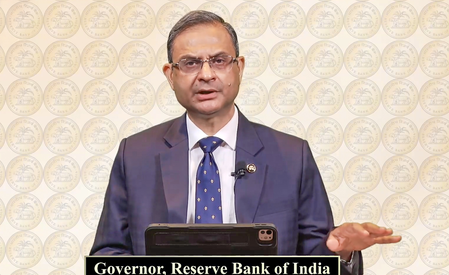
Sanjay Malhotra, speaking after the RBI’s monetary policy announcement, stated that the Reserve Bank of India has not identified significant governance concerns in HDFC Bank despite the chairman’s resignation due to ethical disagreements. Malhotra emphasized that the current banking laws are clear and effective, indicating no immediate necessity for alterations. However, he mentioned that the central bank would assess the situation if needed.
Malhotra reassured that there are no widespread worries in the banking sector, affirming that the overall system remains secure and steady, with isolated incidents not impacting banks’ overall well-being. He specifically highlighted that there are no systemic issues regarding HDFC Bank’s profitability or financial robustness.
Following recent events at HDFC Bank, where the chairman’s abrupt resignation raised governance queries, the RBI governor disclosed plans to revise guidelines for bank boards. The objective is to enable boards to focus more on significant policy decisions rather than day-to-day operations, streamlining their responsibilities. The review of these regulations was initiated in response to requests from banks to enhance the efficiency of board members.
Moreover, the central bank proposed granting banks more flexibility in incorporating quarterly profits in capital-to-risk weighted assets ratio (CRAR) calculations, regardless of provisioning level fluctuations. Malhotra, during the RBI MPC decision announcement, suggested eliminating the NPA provisioning condition for including quarterly profits in CRAR computation.
