


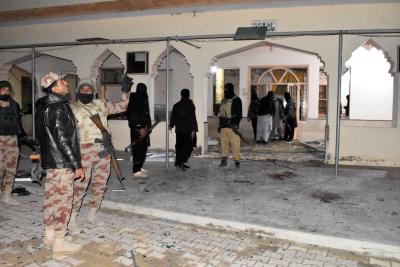
The recent attacks in Pakistan’s Balochistan have brought attention to security challenges and longstanding grievances within the province. Documented human rights abuses, including enforced disappearances and alleged extrajudicial killings, have created an environment where peaceful dissent is suppressed, leading some to resort to armed resistance for change.
On January 31, Balochistan experienced a series of coordinated attacks by the Balochistan Liberation Army (BLA) under ‘Operation Herof 2.0,’ resulting in casualties among security personnel and civilians. Pakistani forces reported the killing of 145 insurgents in response, although the BLA disputed this figure. The attacks involved various violent methods and led to heightened security operations in the region, raising concerns about the treatment of local populations.
The violence in Balochistan is not an isolated event but a significant escalation in a conflict deeply rooted in Pakistan’s history. The crisis stems from longstanding grievances, documented human rights violations, economic disparities, and perceived political failures. Despite being rich in natural resources, Balochistan remains the poorest province in Pakistan, with a large percentage of its population living in poverty and facing high unemployment rates.
The $62 billion China Pakistan Economic Corridor (CPEC) and the development of Gwadar port in Balochistan have become contentious issues. Local communities have raised concerns about displacement, economic marginalization, and lack of participation in decision-making processes related to projects on their lands. Enforced disappearances and extrajudicial killings are among the most serious allegations in Balochistan, with human rights organizations documenting numerous cases of abuse.
