


The Regional Rapid Transit System (RRTS) in India is proving to be a significant driver for corridor-based investments, with around 80% of current users linking improved RRTS connectivity to better economic prospects in their areas, a report revealed. The perception of economic growth is notably strengthened in areas where infrastructure enhancements are visible, leading to a more than 2.25 times increase in confidence. This has translated into a notable interest in real estate, with 66% of current users showing readiness to invest in properties along the RRTS corridor, as per a report by Knight Frank India.
The existence of commercial activities and ongoing real estate developments plays a crucial role in influencing investment sentiment, amplifying investment intentions by 10.2 times and 7.7 times, respectively. The report also highlights a clear opportunity for decentralization, with 38% of respondents expressing openness to moving away from central urban hubs, contingent upon the availability of necessary social infrastructure. This underscores the significance of integrated residential, commercial, and civic development in fully unlocking the investment potential of RRTS corridors.
According to Shishir Baijal, International Partner, Chairman, and Managing Director of Knight Frank India, the RRTS serves as a crucial infrastructure intervention in India’s urban and regional transportation landscape. Commuters prioritize time savings, safety, reliability, and are willing to embrace modern transport solutions when connectivity functions seamlessly. Integration, both in terms of mobility and urban development, is emphasized as crucial for policymakers and city planners. For investors and developers, RRTS corridors offer concrete growth opportunities where infrastructure aligns with land-use planning and commercial progress.
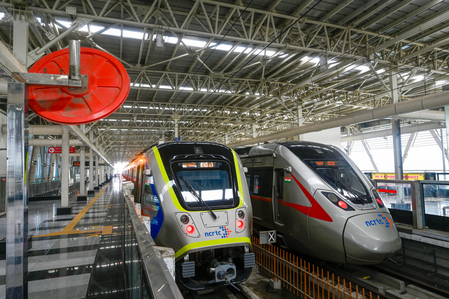
The RRTS, exemplified by the flagship Delhi–Ghaziabad–Meerut corridor under development by the National Capital Region Transport Corporation (NCRTC), has initiated its phased rollout. The corridor, sanctioned at a cost exceeding Rs 30,000 crore, is set to cover 82 km and drastically reduce travel time between Delhi and Meerut to less than an hour. The system’s priority section is already operational, and the sustained funding underscores the government’s commitment to completing the project.
