


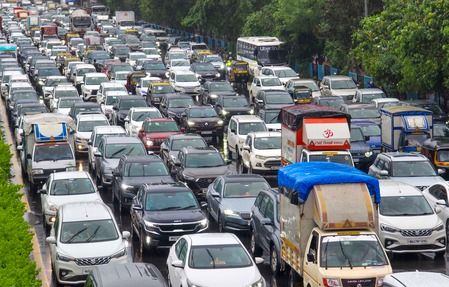
Rural India played a crucial role in boosting passenger vehicle sales in 2025, surpassing urban markets in demand growth, according to data from the Federation of Automobile Dealers Associations (FADA). Sales of passenger vehicles in rural areas increased by 12%, outpacing the 8% rise in urban regions. The total number of passenger vehicles sold in 2025 reached 4.47 million units, up from 4.1 million units in 2024.
A significant shift in India’s mobility landscape was observed, with about one-third of all passenger vehicles sold in 2025 being powered by alternative fuels like CNG, hybrids, and electric vehicles. The data revealed an increase in the market share of CNG vehicles from 18% to 21% and electric vehicles from 2.4% to 4%, indicating a growing preference for cleaner transportation options. However, sales of hybrid vehicles experienced a slight decline to 8.2% from 8.7% the previous year.
In December, there was a notable surge in passenger vehicle sales, with a 26.64% year-on-year increase. Rural areas witnessed a substantial growth of 32.40% in sales during the same month, surpassing urban regions and highlighting the escalating demand for mobility in non-metro areas. December recorded a total of 3,79,671 units of passenger vehicles sold, compared to 2,99,799 units in the corresponding period of the previous year.
FADA President C S Vigneshwar attributed the rise in rural demand to a successful harvest season and favorable monsoon conditions that bolstered rural incomes. Factors such as higher minimum support prices, GST rationalization, revised income tax slabs, and multiple rate cuts by the Reserve Bank of India also contributed to enhancing the purchasing sentiment in rural areas. Across various vehicle categories, two-wheeler sales grew by 7.24%, passenger vehicles by 9.70%, commercial vehicles by 6.71%, and tractor sales by 11.52%.
Vigneshwar emphasized that while there was a widespread growth in retail sales, the distinct surge in rural demand for passenger vehicles indicated a faster growth rate compared to urban markets, signaling a broader adoption of personal mobility options.
