


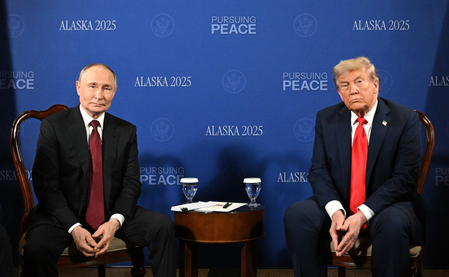
Russia and the United States have agreed to start negotiations on the New Strategic Arms Reduction Treaty (New START) promptly, according to Kremlin spokesman Dmitry Peskov. Discussions on this matter took place during recent talks in Abu Dhabi, where both sides acknowledged the importance of assuming responsible positions. Peskov described the talks in Abu Dhabi as constructive yet challenging, emphasizing the ongoing nature of the discussions.
Delegations from Russia, the United States, and Ukraine participated in trilateral talks in Abu Dhabi, focusing on Ukraine-related issues. While Russia and Ukraine managed a significant prisoner exchange, they faced difficulties in resolving core matters like territorial arrangements and a ceasefire. The United States and Russia, being the world’s primary nuclear powers, collectively own around 87% of the global nuclear weapons arsenal.
The New START treaty, effective since 2011 and extended in 2021 for five more years, has been pivotal in maintaining bilateral strategic stability. It imposed a cap of 1,550 deployed strategic nuclear warheads on each side and placed restrictions on delivery systems, including intercontinental ballistic missiles and heavy bombers. US President Donald Trump criticized the treaty on his Truth Social platform, labeling it a poorly negotiated agreement that is being violated. Trump advocated for a new, enhanced treaty that aligns better with US interests, signaling a willingness to move beyond the existing framework.
The Russian Foreign Ministry indicated that both parties are no longer bound by the treaty’s obligations after its expiration. Trump’s stance against arms control agreements is evident from his withdrawal from the Intermediate-Range Nuclear Forces Treaty in 2019, citing its ineffectiveness in curbing adversaries. With the New START treaty no longer in force, the US and Russia have lost their final arms control mechanism, leading to a strategic void that transcends their bilateral ties. The absence of such agreements has plunged nuclear arms control into uncertain territory amid a complex and unpredictable geopolitical environment.
