


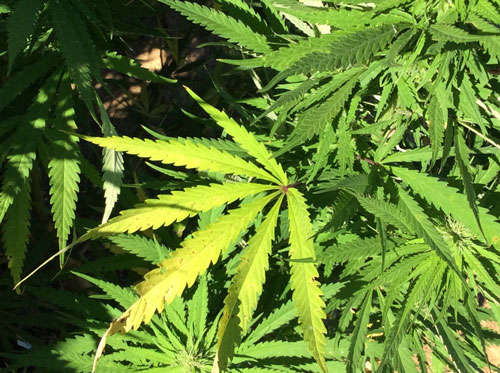
When Narendra Modi became Prime Minister in 2014, security measures in the northeastern states were heightened alongside developmental projects. This focus led to a decline in marijuana cultivation in states like Assam, Tripura, Manipur, Meghalaya, and Mizoram, shifting the demand to Nepal where the drug is now cultivated in large quantities.
The marijuana grown in the hilly regions of the Northeast is highly sought after in American and European markets due to its superior quality. With a decrease in cultivation in Indian states, attention has turned to Nepal, where significant quantities are being produced and smuggled into India through Bihar.
The contraband is then transported to South Indian states and eventually reaches Sri Lanka before being distributed in international markets. Central agencies like the Narcotics Control Bureau are closely monitoring this extensive network, particularly along the India-Nepal border, which has become a key route for marijuana smuggling.
Officials have identified Sunsari in Nepal as a major hub for marijuana smuggling, with the drug entering India through the borders of Araria and Supaul districts in Bihar. Despite efforts to curb smuggling activities, the porous Indo-Nepal border remains a challenge, exploited by smugglers who use various means including private vehicles and the assistance of local touts.
