


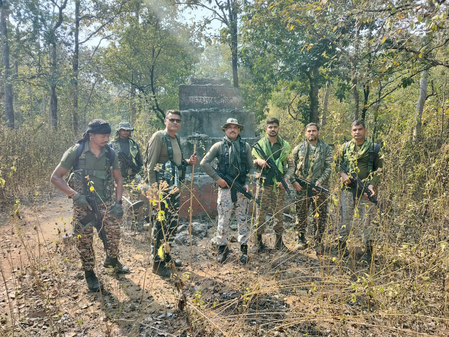
The security forces are diligently working towards meeting the deadline set by Union Home Minister Amit Shah to eliminate all Maoists from India by March 31. Operations are in their final stages, with a focus not only on ground activities but also on eradicating the Maoist ideology. This ideological aspect is considered crucial in the fight against Maoists, as it can be equally dangerous.
Efforts are underway in both urban and remote areas to completely eradicate the ideology associated with the Maoist movement. The strategies for addressing urban and rural areas differ, as explained by a security official. Last year, Intelligence agencies had issued alerts about attempts to spread Maoist ideology in urban regions.
The National Investigation Agency (NIA) took up a case in 2019, known as the urban naxalite case, revealing how some individuals disguised as NGO workers were actually receiving foreign funds to support the Maoist movement. The investigation led to several arrests and uncovered plots targeting high-profile personalities. Intelligence agencies have adopted a two-pronged approach to counter individuals associated with the Maoist movement infiltrating various protests.
In rural areas, the CRPF is identifying and demolishing memorials erected in honor of top Maoist leaders who were killed by security forces. These memorials, totaling 53 so far, are being removed in forest areas like Sukma, Bastar, and Bijapur in Chhattisgarh. A plantation drive is also underway to ensure the areas blend back into the forest, erasing any trace of the memorials.
The destruction of these memorials is seen as a crucial step to prevent any future resurgence of the Maoist movement. Officials emphasize the need to completely erase all memories associated with the naxalite movement to prevent any revival. Villagers have shown support for the security forces’ actions, indicating a positive response to the efforts to eliminate the naxalite menace.
Following an encounter resulting in the death of Nambala Keshava Rao alias Basavaraju and 26 others, attempts were made to organize a grand funeral, which was thwarted by the Chhattisgarh Police. The police, after denying the body to alleged relatives lacking proper documentation, prevented efforts to glorify the naxalite through propaganda. Human rights organizations protested the police’s actions, alleging a lack of family involvement in the funeral proceedings.
