


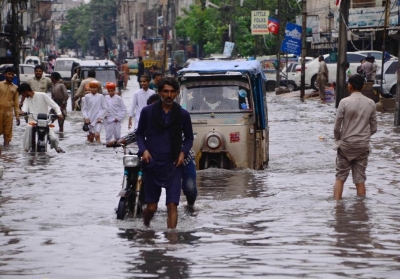
As heavy rains and a windstorm hit parts of Pakistan’s Khyber Pakhtunkhwa province, seven people lost their lives, and eight others sustained injuries. The adverse weather caused roofs and walls of houses and shops to collapse in Paharpur city and surrounding areas of Dera Ismail Khan. Rescue operations were conducted to locate victims trapped in the debris, with the injured individuals being rushed to hospitals for treatment.
The casualties included individuals from various locations, such as Paharpur, Chah Dyal Bagwani, and Zandar village. Additionally, significant damage was reported, including uprooted trees, blown-away solar panels, and collapsed livestock shelters. The windstorm also disrupted the electricity distribution network, leading to power outages in several parts of Paharpur and nearby regions.
In a separate incident, three people were killed and four others injured by lightning in the Orakzai tribal district. The adverse weather conditions also caused disruptions in the power supply and structural damage, such as the collapse of a school boundary wall in the Bajaur tribal district. Despite advance warnings from the National Disaster Management Authority, the impact of the storms highlighted gaps in preparedness and response measures.
The recent storms in Pakistan have underscored the challenges in translating weather forecasts into effective action. While timely warnings were issued for vulnerable areas, including Chitral, Swat, Lahore, and Rawalpindi, the response mechanisms fell short in mitigating risks and minimizing damages. The recurring disruptions emphasize the need for improved coordination and proactive measures to address the impact of seasonal storms on communities.
