


The Health Minister of South Africa, Aaron Motsoaledi, has disclosed that the number of potential contacts with hantavirus-infected individuals has risen to 97. Collaborating with the World Health Organisation (WHO) and the National Institute for Communicable Diseases (NICD), South African teams are diligently tracing individuals exposed to infected persons, including passengers, healthcare workers, and airline contacts. Motsoaledi emphasized that out of the 97 identified contacts, 90 have been reached and advised, with continuous monitoring over a six-week period.
Four of the contacts, among the 90 reached individuals, are located in the Western Cape, while the remaining 86 are in Gauteng. Notably, only one contact in the Western Cape exhibited symptoms, although tests for the virus have returned negative as of Friday. The minister’s update comes in the wake of the confirmation of the Andes strain’s human-to-human transmissibility in two hantavirus cases in South Africa, linked to a cruise ship outbreak.
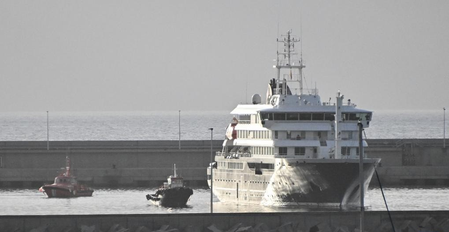
Following their disembarkation from the MV Hondius cruise ship, associated with the disease outbreak, a British national and a Dutch woman were diagnosed with the Andes strain in South Africa. Tragically, the Dutch woman passed away in the country, while her husband, believed to be the index case, died on the ship, with his body transported to St Helena. The MV Hondius journeyed from Ushuaia, Argentina, on April 1, making several stops across the South Atlantic.
Globally, the WHO has reported a total of 11 hantavirus-related cases, including three fatalities. Among these cases, nine have been confirmed as Andes infections, with the remaining two classified as probable cases. According to the NICD, the Andes strain stands as the sole hantavirus strain known to facilitate human-to-human transmission.
