


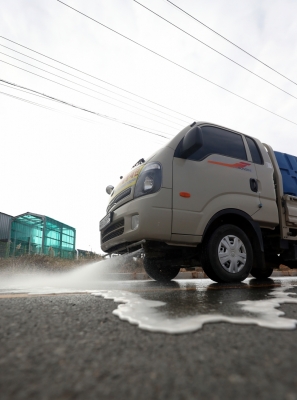
South Korea discovered new cases of highly pathogenic avian influenza at three poultry farms, raising this season’s total to 21. The affected farms are located in Anseong, Gochang, and Naju. Authorities have imposed restrictions, initiated culling of animals, and launched investigations to contain the outbreaks.
In response to the avian influenza cases, inspections will be conducted at affiliated duck farms and those in North Jeolla Province. Additionally, agriculture ministry officials will be deployed to areas with potential risks of further outbreaks.
Meanwhile, Japan confirmed an outbreak of highly pathogenic avian influenza at a farm in Kyoto Prefecture, marking the ninth case this season. The affected farm in Kameoka City, housing around 280,000 egg-laying chickens, will undergo culling and strict movement restrictions for neighboring farms.
Efforts to prevent the spread of the virus include enhanced disinfection measures and the dispatch of an epidemiological investigation team. Japan’s avian influenza season typically spans from autumn to spring, with nearly 2.4 million chickens culled due to the previous eight outbreaks.
Avian influenza, caused by virus sub-types A(H5N1) and A(H9N2), primarily affects birds but has sporadically infected humans. Although human transmission is rare, cases are linked to contact with infected poultry.
