

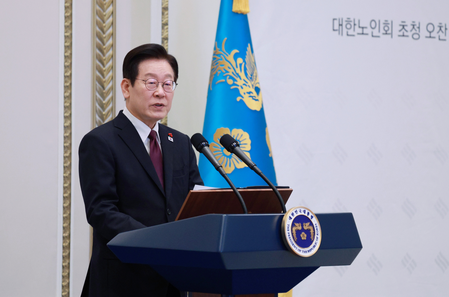
South Korean President Lee Jae Myung has committed to expanding welfare assistance for senior citizens, recognizing their vital role in the country’s economic progress and democratization. South Korea has officially transitioned into a super-aged society this year, with individuals aged 65 and above constituting over 20% of the population. During a luncheon with representatives of the Korean Senior Citizens’ Association, Lee emphasized that policies for the elderly benefit society as a whole. The government is introducing various initiatives to ensure that seniors can lead healthy and dignified lives, including a comprehensive care system integrating medical, nursing, and caregiving services set to launch in March. Additionally, there will be an increase in basic pension payments and the expansion of senior employment programs. Lee also announced plans to gradually extend National Health Insurance coverage to encompass caregiving expenses at nursing homes. Emphasizing the importance of utilizing seniors’ knowledge and skills as valuable social assets, Lee pledged to reinforce the welfare safety net. He expressed gratitude to the older generation for their contributions in rebuilding the nation post the Korean War and in fostering democracy and economic growth. Lee acknowledged the seniors’ sacrifices and dedication, attributing South Korea’s achievements in various sectors to their hard work. He described the country’s recent history as a turning point, overcoming a democratic crisis and returning to stability after a turbulent period.
South Korean President Vows to Enhance Welfare Support for Elderly Citizens


Indian Community Editorial Team
The Indian Community Editorial Team curates, verifies, and publishes stories that matter to Indians worldwide. From culture and community to business and innovation, our mission is to spotlight voices, ideas, and events that bring our global community closer together. Have news or a story to share? Submit it to us at [email protected].
Add A Comment