


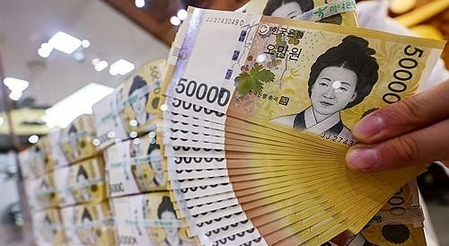
South Korea’s money supply increased for the fourth straight month in February, driven by a rise in savings deposits despite a decrease in certificates of deposit (CDs), according to data from the Bank of Korea. The country’s M2, a crucial measure of the money supply, averaged 4,114 trillion won ($2.79 trillion) in February, marking a 600 billion won increase from the previous month. This rebound in the figure has been consistent since November, following a decline in the prior month.
M2 encompasses cash, demand deposits, and other easily convertible financial instruments. A Bank of Korea official noted that demand deposit-type savings grew due to a rise in idle funds awaiting fiscal execution by local governments, while marketable instruments, like CDs, decreased because of unfavorable issuance conditions and reduced funding demand. Liquidity among financial institutions rose by 9.4 trillion won and by 5 trillion won among non-financial corporations, while liquidity held by households and nonprofit organizations dropped by 10.5 trillion won.
South Korean shares surged on Wednesday morning, with the benchmark Korea Composite Stock Price Index (KOSPI) surpassing the 6,000-point mark amid renewed hopes for a second round of potential US-Iran peace talks. The KOSPI added 174.62 points, or 2.93%, reaching 6,142.37 by 11:20 a.m., exceeding 6,000 for the first time since February 28. Investors are optimistic about the prospect of Washington and Tehran engaging in further peace discussions after an initial round that ended without an agreement. In the US, stocks closed higher, with the Dow Jones Industrial Average up by 0.66% and the Nasdaq Composite gaining 1.96%.
