


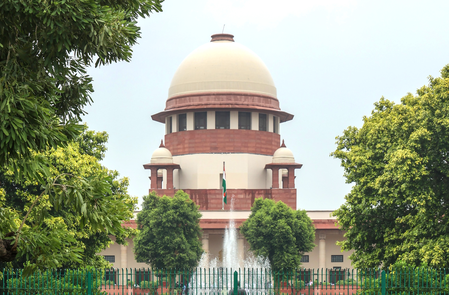
The Supreme Court clarified that an accused does not have an unqualified right to have a lawyer continuously present during police interrogation. Section 38 of the Bharatiya Nagarik Suraksha Sanhita (BNSS) guarantees the right to meet a lawyer during interrogation, not the lawyer’s uninterrupted physical presence.
A bench of Justices Vikram Nath and Sandeep Mehta modified conditions imposed by a trial court regarding police custody of a suspended police inspector in a custodial death case. The court observed that some safeguards had become impractical and hindered effective investigation.
Interpreting Section 38 of the BNSS, the court stated that the right to meet an advocate of choice during interrogation does not require the continuous physical presence of a lawyer throughout questioning. The conditions allowing the accused to nominate advocates and regulating their presence at the interrogation site were considered “unobjectionable” and “salutary.”
Modifying the conditions, the bench directed that the accused’s lawyer may remain present at a location where they can observe the accused during interrogation but cannot intervene in the investigation. The court also noted that confining the custodial interrogation to a specific location was not justified in a case involving a custodial death.
The Supreme Court emphasized the importance of constitutional safeguards protecting an accused against coercion, assault, or third-degree methods. It upheld the requirement of CCTV coverage and audio-visual recording during interrogation sessions to protect both the accused and the investigating agency.
