


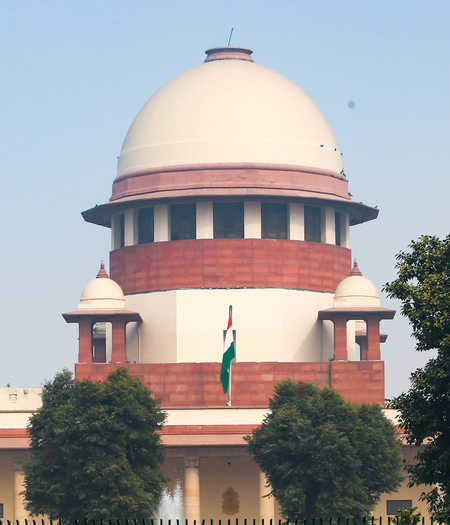
The Supreme Court has expressed worry about the increasing number of dog bite cases nationwide and the failure of municipal bodies to enforce the Animal Birth Control (ABC) Rules effectively. Justices Vikram Nath, Sandeep Mehta, and N.V. Anjaria, presiding over a case on managing stray dogs in public areas, noted that both children and adults are being bitten, leading to fatalities due to inaction. The court highlighted that stray animals on roads are not just a biting concern but also a significant cause of accidents.
Amicus curiae Gaurav Agarwal informed the bench that the National Highways Authority of India (NHAI) had identified around 1,400 km of vulnerable highway stretches following the court’s directives. However, he emphasized that state governments must take coordinated action, including setting up shelters and manpower for ABC centers, to implement the SOP effectively. Several major states like Madhya Pradesh, Uttar Pradesh, Tamil Nadu, Karnataka, and Punjab are yet to submit compliance affidavits, as mentioned by the amicus.
The Supreme Court cautioned non-compliant states, stating that it would adopt a strict stance. Senior advocate Kapil Sibal, representing animal welfare groups, argued for population control through sterilization and vaccination as a sustainable solution. Sibal warned against haphazard removal of dogs, advocating the CSVR (Capture, Sterilize, Vaccinate, and Release) model to prevent territorial issues and the spread of rabies. The court emphasized the need for institutional premises like courts, schools, and hospitals to remain free of stray animals for the safety of children, patients, and individuals with disabilities.
Solicitor General Tushar Mehta suggested that residents’ welfare associations in gated communities should decide through voting whether to allow stray animals within their premises. He emphasized that compassion for animals should not compromise residents’ rights and safety. The Supreme Court will continue the hearing on Thursday to further assess the situation and the compliance status of states and union territories (UTs).
