


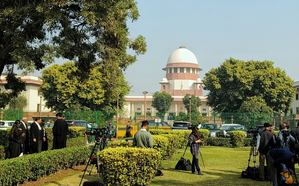
The Supreme Court rejected a petition challenging the government’s advisory on singing ‘Vande Mataram’ at official events. The court stated that the circular does not mandate compliance or impose penalties. The bench emphasized that the notification is advisory and does not make singing the national song compulsory.
Senior advocate Sanjay Hegde, representing the petitioner, raised concerns about potential indirect coercion due to social pressures. However, the court dismissed these apprehensions as speculative, noting that there were no penal consequences mentioned in the advisory.
The petition contested the government’s suggestion for singing ‘Vande Mataram’ in educational institutions and public functions. The government clarified that the guideline aims to foster respect for the national song without legal enforcement. The issue gains significance amidst discussions on the historical importance of ‘Vande Mataram.’
Prime Minister Narendra Modi recently highlighted the enduring significance of ‘Vande Mataram’ during a parliamentary discussion commemorating its 150-year composition. He praised the song as a unifying symbol that played a crucial role in India’s freedom struggle and continues to inspire generations.
‘Vande Mataram,’ composed by Bankim Chandra Chattopadhyay in 1875 and later set to tune by Rabindranath Tagore, became a powerful anthem during the independence movement. Notable leaders like Lala Lajpat Rai, Bal Gangadhar Tilak, Bhagat Singh, and Subhas Chandra Bose resonated with its message. In 1950, India’s first President, Rajendra Prasad, designated ‘Vande Mataram’ as the national song.
