


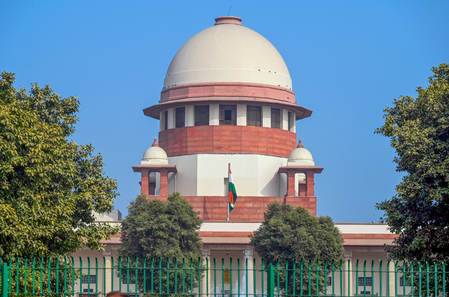
The Supreme Court has raised a woman’s monthly maintenance from Rs 15,000 to Rs 25,000, emphasizing that a husband’s financial responsibilities, like loan repayments for asset creation, should not override his duty to support his spouse. Justices Sanjay Karol and AG Masih made this decision in response to Deepa Joshi’s appeal against her estranged husband, Gaurav Joshi, regarding the adequacy of maintenance set by lower courts. The apex court adjusted a previous order by the Uttarakhand High Court from June 26, 2025, which had increased the maintenance from Rs 8,000 to Rs 15,000 per month.
In its ruling, the bench led by Justice Karol highlighted that the husband, a Canara Bank Manager, earns a gross monthly income of Rs 1,15,670 with stable earnings. It was noted that the wife, without her income source, has been living separately post-marriage. The court stated that loan repayments leading to asset acquisition are considered capital investments and should not be seen as essential expenses.
The court emphasized that a husband’s obligation to financially support his spouse is a fundamental and ongoing responsibility that must enable the wife to live with dignity. The Supreme Court stressed that maintenance should be fair, reasonable, and in line with the parties’ status. The bench, led by Justice Karol, found that deductions from the husband’s salary, including loan repayments, should not significantly reduce the maintenance amount, especially when they contribute to asset creation.
Therefore, the Supreme Court increased the monthly maintenance to Rs 25,000, effective from the original application date. The court instructed any arrears to be settled within three months and for the monthly maintenance to be paid by the 7th day of each month. The case stemmed from a maintenance plea filed by the wife under Section 144 of the Bharatiya Nagarik Suraksha Sanhita, 2023, citing neglect and harassment, and claiming an inability to sustain herself. The Family Court initially granted Rs 8,000 per month, which was later raised by the Uttarakhand High Court before reaching the Supreme Court.
