


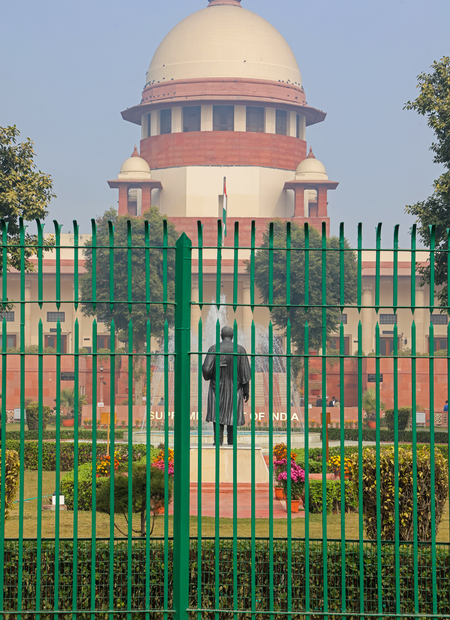
The Supreme Court has issued a notice on a Public Interest Litigation (PIL) requesting the installation of display boards at police stations and public offices. These boards would emphasize the penal repercussions of filing false complaints, fabricated charges, and false evidence. The Court, led by Chief Justice of India Surya Kant, highlighted the importance of the constitutional principle of fraternity in guiding societal behavior during the hearing.
The PIL aims to have these display boards placed at various locations such as police stations, district courts, and educational institutions. The purpose is to inform citizens about the legal implications of making false complaints, charges, statements, and evidence. It argues that such measures are essential to protect the rights and dignity of innocent individuals as guaranteed under Article 21 of the Constitution.
Additionally, the petition seeks to ensure that complainants are made aware of the legal consequences of filing false complaints before any official action is taken. It also proposes obtaining undertakings from complainants to verify the accuracy of their claims, with the goal of reducing frivolous litigation and malicious prosecutions. The plea emphasizes the need to address the issue of false complaints and fabricated evidence, which it claims are burdening the criminal justice system and undermining fundamental freedoms.
