


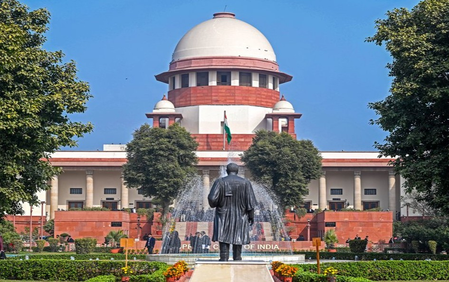
The Supreme Court has officially established a nine-judge Constitution Bench to hear the long-pending Sabarimala review matter starting from April 7. The bench, led by Chief Justice of India Surya Kant, will address the review petitions filed against the 2018 judgment allowing women of all ages to enter the Sabarimala temple, among other related issues concerning religious freedoms.
Scheduled to convene at 10:30 a.m. in the Chief Justice’s court at the Supreme Court, the nine-judge bench includes Justices B.V. Nagarathna, M.M. Sundresh, Ahsanuddin Amanullah, Aravind Kumar, A.G. Masih, Prasanna B. Varale, R. Mahadevan, and Joymalya Bagchi. Apart from the Sabarimala case, the bench will also address broader constitutional matters regarding religious freedom under Article 25, such as the entry of Muslim women into mosques and dargahs, rights of Parsi women in accessing fire temples post interfaith marriage, excommunication practices’ validity, and female genital mutilation in the Dawoodi Bohra community.
The Chief Justice-led bench had previously outlined a detailed schedule for the hearings, confirming the reference’s maintainability and identifying seven key legal questions for consideration. The proceedings will involve arguments from parties supporting the review petitions from April 7 to April 9, followed by submissions from those opposing the review between April 14 and April 16. Rejoinder submissions, if any, are scheduled for April 21, with final arguments by the amicus curiae set to conclude on April 22.
In preparation for the hearings, written submissions presented on behalf of the Travancore Devaswom Board have advocated for a “community-centric” interpretation of religion, emphasizing that courts should avoid reinterpreting faith-based practices and questioning the “essential religious practices” doctrine. Solicitor General Tushar Mehta, representing the Union government, has informed the court of the government’s support for the review petitions.
