


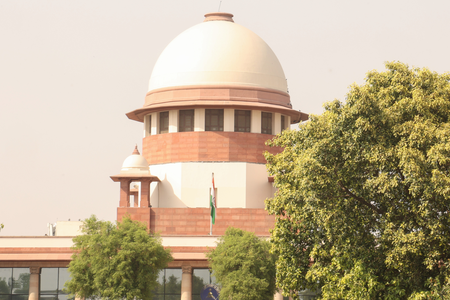
The Supreme Court declined to intervene in the Delhi High Court’s ruling that set aside the technical evaluation process for outsourcing Consular, Passport, and Visa (CPV) services at Indian Missions in Abu Dhabi, Kuwait, Singapore, and Canberra. The Union Ministry of External Affairs (MEA) has been directed to complete a fresh tender process within three months.
The Centre’s special leave petition challenging the Delhi High Court’s verdict was dismissed by a Bench comprising Chief Justice of India Surya Kant and Justices Joymalya Bagchi and V. Mohana. The Solicitor General representing the Centre argued that the evaluation criteria were based on each bidder’s individual competence.
Despite the Centre’s request to present additional reasons for the tender evaluation, the apex court upheld the High Court’s decision and rejected the plea. To ensure continuity in passport, visa, and consular services at Indian Missions abroad, the Supreme Court allowed interim arrangements until the new tender process concludes.
The MEA has been instructed to either retain existing service providers if their performance is satisfactory or engage other agencies, including the previous L-1 bidders, temporarily. This arrangement is deemed temporary, with no bias towards any party, and is subject to the outcome of the fresh Request for Proposal (RFP) process. The MEA must expedite the new tender process, ideally within three months, in line with the Delhi High Court’s directives.
