


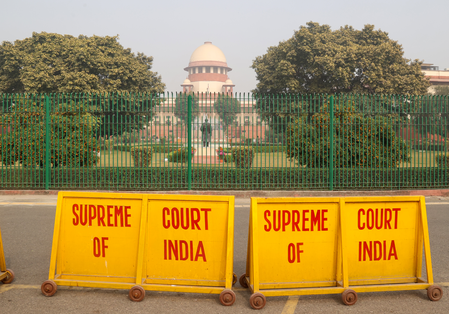
From reinforcing constitutional equality and free speech to issuing far-reaching directions on sanitation, judicial appointments, and human dignity, the Supreme Court delivered a series of landmark rulings in 2025. The court ruled that residence-based or domicile-based reservation in post-graduate medical courses under the state quota is constitutionally impermissible. The Supreme Court emphasized that such reservations go against the principles of citizenship and equality, stating that merit should not be compromised at the post-graduate level.
Upholding the Punjab and Haryana High Court’s decision to strike down Chandigarh’s Government Medical College and Hospital PG reservation policy, the apex court highlighted that every citizen in India has the right to seek education and profession across the country. The Supreme Court directed the construction and maintenance of separate toilet facilities for men, women, persons with disabilities, and transgender persons in all court complexes and tribunals, considering sanitation a basic human right.
The Supreme Court eased the conditions for appointing ad hoc judges in High Courts under Article 224A, allowing the appointment of ad hoc judges up to 10% of the sanctioned strength to address the issue of pending cases. The court clarified that a spouse whose marriage is declared void under the Hindu Marriage Act is entitled to seek permanent alimony and interim maintenance, emphasizing the importance of dignity and equality.
In a significant ruling protecting the independence of the Bar, the Supreme Court restricted investigating agencies from summoning lawyers representing accused persons without prior approval and clear reasons recorded. The apex court overturned earlier precedents, ruling that judicial officers with seven years of prior practice at the Bar are eligible for direct recruitment as district judges, ensuring a level playing field.
Beggars’ homes were addressed by the Supreme Court, which mandated guidelines to ensure these facilities do not function as quasi-penal institutions, emphasizing the dignity and rights of individuals. The court modified its directions on stray dogs, ordering their sterilization, vaccination, and release in their original territories to balance public safety and compassion.
The Supreme Court transferred its proceedings on the RG Kar Medical College case to the Calcutta High Court for continued supervision, directing the CBI to share status reports with the victim’s parents. The court upheld free speech by quashing an FIR against Congress MP Imran Pratapgarhi, emphasizing the enrichment of human life through poetry, literature, and art.
Answering a Presidential reference, the Supreme Court held that courts cannot impose timelines on Governors or the President for granting assent to Bills, clarifying the concept of “deemed assent” and the separation of powers. The court dismissed a PIL challenging gender-specific dowry and domestic violence laws, refused judicial probes into terror attacks, and issued various other key rulings throughout the year.
