


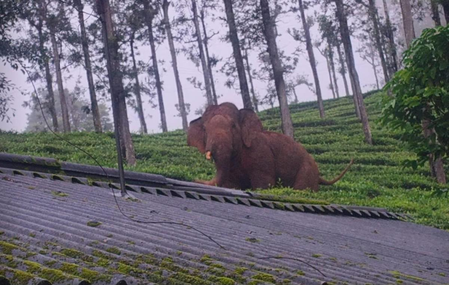
Anticipating increased human-wildlife interactions during the southwest monsoon, the Gudalur Forest Division in Tamil Nadu has heightened surveillance and conflict-prevention efforts in vulnerable villages of the Nilgiris district. The Forest Department has deployed local youths, additional patrol vehicles, and thermal drones in areas prone to wildlife intrusion, especially during the rainy season. This move aims to deter wild elephants and other animals from entering human settlements, a common challenge in the hilly region during monsoon months.
As part of the initiative, 40 youths from conflict-prone villages are assisting forest personnel in monitoring elephant movements and alerting local communities. These youths are aiding officials in tracking animal activities and implementing preventive measures to prevent elephants from entering residential areas. To bolster field operations, three extra patrol vehicles have been brought in from Mudumalai to support elephant-driving activities and emergency responses in conflict-prone zones.
Forest officials believe that the increased mobility will enable quicker responses when elephants are spotted near human habitats. Thermal drones are also being extensively used across forest ranges to monitor wildlife movements, especially during peak elephant activity hours at night and early morning. Information collected through drone surveillance is being utilized to warn nearby villages whenever large animals like elephants are detected close to human settlements.
Residents residing along forest fringes have been advised by the Forest Department to avoid unnecessary travel during late-night and early-morning hours and to remain vigilant throughout the monsoon season. This intensified surveillance effort comes amidst ongoing concerns regarding human-wildlife conflicts in western Tamil Nadu. In a recent incident in Erode district, a 60-year-old farmer lost his life after encountering a wild elephant near his cattle shed late at night in Ramarana village under the Thalamalai forest range of the Sathyamangalam Tiger Reserve.
Forest officials mentioned that the man likely encountered the elephant in poor visibility conditions, leading to the fatal attack before the elephant retreated. The body was recovered and sent for post-mortem examination at the Government Hospital in Sathyamangalam. This incident once again underscores the challenges faced by communities living on the fringes of forests and emphasizes the need to strengthen monitoring and early-warning systems during the monsoon season, when wildlife movements tend to rise in the region.
