


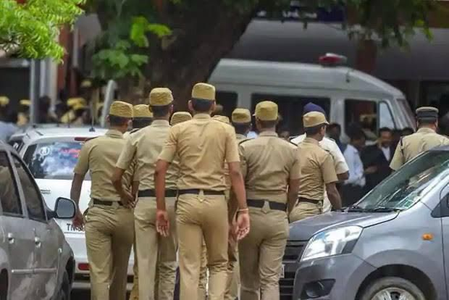
The Tamil Nadu government has taken steps to abolish the contentious “orderly system” within the police force. This move involves setting up district-level monitoring committees to eliminate the criticized practice. The government informed the Madras High Court about issuing a Government Order (GO) for this purpose.
Advocate General P.S. Raman presented a copy of the January 21 GO to the court, stating that the state had followed the court’s directives from January 7 with slight procedural adjustments. The “orderly system” involves assigning police personnel to perform personal and household tasks for senior officers, a practice deemed exploitative and unrelated to official police duties.
Under the new GO, each district will establish a five-member committee chaired by the District Collector. This committee will include the District Revenue Officer (DRO), another officer of equal rank nominated by the Collector, the Additional Superintendent of Police (Headquarters), and another ASP-rank officer. These committees are responsible for receiving complaints, gathering information, and ensuring the elimination of the orderly system.
The committees are mandated to prevent police personnel from engaging in personal or household work and redeploy them to regular policing duties. They must submit progress reports to the Home Secretary every two months for accountability. In urban areas like Chennai, Coimbatore, and Madurai, Collectors can form multiple teams to enhance enforcement. The Additional Chief Secretary, Home (Police VI) Department, will take disciplinary action against officials for any reported violations.
Following the government’s compliance, the judges emphasized the importance of continuous monitoring. The case has been adjourned for four weeks to assess the effectiveness of these measures. This initiative aims to bring about structural changes in police administration and uphold the dignity of uniformed personnel in Tamil Nadu.
