


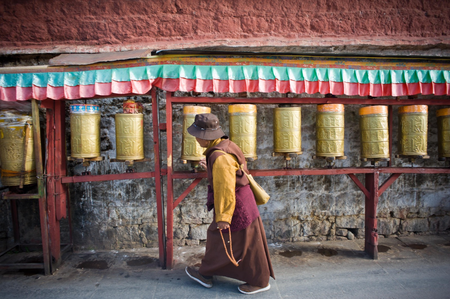
The recent death of a young Tibetan monk sheds light on the increasing repression in Tibet, where Chinese authorities view even sharing information on digital platforms as potential security risks. A report from Pakistan’s online magazine ‘Bitter Winter’ revealed that Tibetan Buddhism faces a severe crackdown, with individuals entering police custody alive but returning as deceased.
The report specifically mentions the case of Tibetan monk Samten, whose body was sent back to his monastery in December under the pretext of sudden illness and emergency treatment. However, details about his illness, treatment, and detention circumstances were not disclosed, and monks were cautioned against discussing the incident. In Tibet, maintaining silence is not a choice but a mandate enforced by authorities.
Samten, a 25-year-old monk from Dhitsa Geden Tashi Chöding Ling monastery in the Amdo region, was known for his involvement in Tibetan-language education and cultural preservation efforts. The monastery, a hub for monastic scholarship, has faced increased state surveillance due to its focus on Tibetan language and culture, which is perceived as politically sensitive by Chinese authorities.
The tragic death of Samten reflects a broader pattern of human rights abuses in Tibet, particularly preceding the Dalai Lama’s 90th birthday. Incidents such as monastery raids, disappearance of senior monks, and coercion tactics to denounce the Dalai Lama indicate a systematic campaign to control and alter Tibetan Buddhism to align with the Chinese Communist Party’s ideology. The report underscores a disturbing trend where Tibetans detained for political or religious reasons often perish in custody, leading to a cycle of arrest, secrecy, death, denial, and enforced silence by authorities.
