


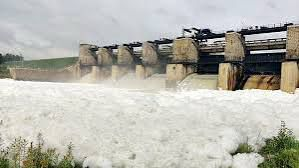
The accumulation of toxic foam in the South Pennai River near the Kelavarapalli dam in Hosur is worrying farmers in Krishnagiri district. The foam, visible for about a month, has intensified after recent rains in Karnataka, leading to increased inflow into the dam. This situation has sparked fears among farmers about the impact on irrigation, agriculture, and the overall ecological balance of the river.
Farmers are concerned that the deteriorating water quality could harm thousands of acres of farmland that rely on the Kelavarapalli dam for irrigation. They are worried that ongoing pollution may jeopardize crop cultivation and the long-term sustainability of agriculture in the area. Local farmer groups suspect that untreated sewage from urban areas in Karnataka is a major contributor to the pollution in the river.
Calls have been made for a thorough investigation of industrial units, including mills along the river in Tamil Nadu and Karnataka, to determine if industrial discharges are adding to the contamination. Farmer associations are planning to meet with officials from the Water Resources Department to push for immediate action and a coordinated plan involving both states.
Authorities have been urged to conduct scientific studies to pinpoint the pollution sources and implement measures to stop untreated waste from entering the river. Routine monitoring by the Water Resources Department has revealed high levels of sulphates and phosphates, typically linked to sewage pollution rather than industrial effluents. The department’s findings show that oxygen levels in the affected area have dropped significantly, indicating severely degraded water quality unsuitable for aquatic life.
Regular water sampling and analysis are being conducted by sending samples to laboratories in Chennai and Pollachi to assess various quality parameters. The Tamil Nadu Pollution Control Board is also independently examining samples to gauge the pollution extent. Farmers are stressing the need for a swift investigation and the implementation of long-term pollution control strategies, warning of the severe repercussions on agriculture, biodiversity, and public health if the condition of the South Pennai River continues to deteriorate.
