


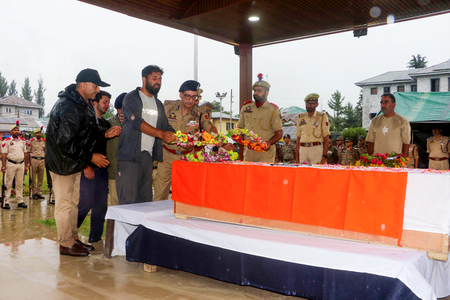
The Resistance Front (TRF) has reappeared in Jammu and Kashmir, making headlines after the Pahalgam terror incident last year. Following the recent killing of a police constable in Anantnag, the TRF, linked to Lashkar-e-Taiba, claimed responsibility for the attack on social media.
Intelligence agencies are investigating the Anantnag incident, viewing the TRF’s claim as a move to assert its presence. Pakistan’s Inter-Services Intelligence (ISI) is believed to be backing the TRF’s resurgence strategically, amid tightened security measures in Jammu and Kashmir post Operation Sindoor.
Efforts by the ISI to revive other groups in the region have faltered, leading to a focus on TRF as the preferred option for local operations. The recent attack is seen as a recruitment tactic by TRF, targeting youth in Jammu and Kashmir to gauge its influence and attract new members.
The TRF is expected to escalate its activities gradually, starting with smaller attacks and emphasizing recruitment efforts. With a shift in India’s security approach post the Pahalgam attack, the ISI is keen on cultivating a local militant outfit in Jammu and Kashmir for strategic reasons.
