


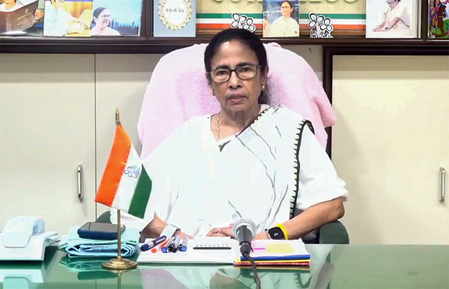
Between 2009 and 2014, the Trinamool Congress expanded its presence in the Lok Sabha, pushing for a dedicated party office under Mamata Banerjee’s leadership. Initially, the demand for a separate office was linked to the decline of the Communist Party of India (Marxist) in Parliament.
The Trinamool Congress was granted a Parliamentary office after the CPI(M) had its office in the same building. During the current Monsoon Session, Abhishek Banerjee, a Trinamool leader, was seated behind his former colleague, Sudip Bandopadhyay, following a split in the party.
The rebel lawmakers from Trinamool merged with the National Citizens Party of India (NCPI), led by Bandopadhyay, altering the political dynamics in favor of the ruling NDA. This move solidified the NCPI’s position as a significant political bloc in the lower house and a crucial ally of the BJP-led coalition.
The merger of the rebel Trinamool faction with the NCPI was in accordance with the anti-defection law, allowing them to avoid disqualification. Despite challenges to the legitimacy of this move, the procedural aspects align with Indian laws governing party splits and mergers in the legislature.
The realignment of numbers in the Lok Sabha has strengthened the NDA’s position, with the NCPI now overshadowing the original Trinamool party within Parliament.
