


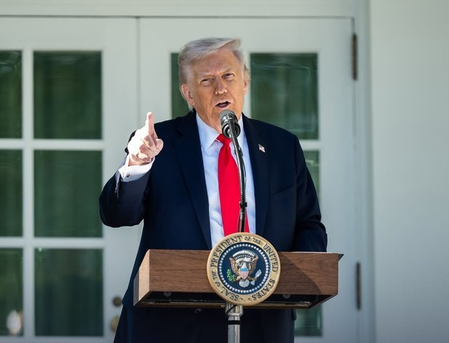
US President Donald Trump announced plans to issue a comprehensive executive order within a week to tackle the financial challenges in American college sports. Trump expressed concerns over the increasing payments to athletes and legal issues that could jeopardize the financial stability of universities and the future of Olympic sports. He emphasized the urgent need for action to prevent universities from facing significant financial losses due to the current unsustainable system.
Trump highlighted the escalating financial pressures faced by educational institutions, driven by payments to athletes and uncertainties surrounding eligibility, transfers, and compensation rules related to name, image, and likeness (NIL). He warned that the financial competition for athletes in popular sports like football and basketball has led to what he termed a “financial arms race” among schools. Without prompt intervention from Congress, Trump cautioned that college sports and the institutions supporting them could face severe consequences.
The president cited examples of universities reporting substantial losses in their athletic divisions, such as Penn State’s $535 million loss and Florida State’s $440 million deficit. Trump underscored the need for immediate action to address the soaring costs and legal challenges that have left athletic programs vulnerable to financial instability. He indicated his intention to draft an all-encompassing executive order after consulting with experts, as he believed legislative progress in Congress might be slow.
In addition to the executive order, efforts are underway in Congress to advance the Score Act, a proposed legislation aimed at establishing national standards for athlete compensation, transfers, and governance. House Speaker Mike Johnson expressed optimism about the bill’s imminent passage in the House, emphasizing the necessity for swift congressional action to address the escalating issues in college sports. Supporters of reform stressed the vital role of college athletics in providing educational opportunities and serving as a pathway for Olympic athletes.
Various participants in the discussion highlighted the importance of college sports in the US, with Secretary of State Marco Rubio emphasizing the access to higher education that sports scholarships provide for thousands of students. Former Alabama football coach Nick Saban raised concerns about the current system incentivizing athletes to prioritize short-term financial gains over education. NCAA President Charlie Baker underscored the significant support provided by the college sports system to over half a million athletes through scholarships worth billions of dollars.
Officials also raised concerns about the potential adverse impact of financial pressures on women’s and Olympic sports programs. Sarah Hirshland, CEO of the US Olympic and Paralympic Committee, emphasized the critical role of the college system in fostering Team USA’s success over the years. Participants agreed on the need for consistent national regulations to address the lack of uniform rules in the current college sports landscape. House Majority Leader Steve Scalise warned against the prevailing chaotic environment in college athletics, stressing the importance of restoring order through congressional and regulatory actions.
