


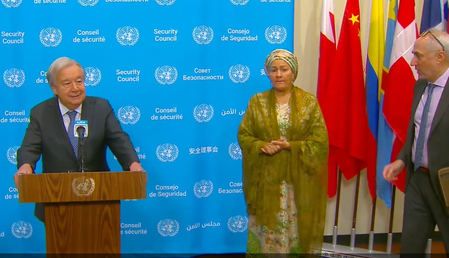
Warning of a significant decline in global economic growth and an increase in poverty worldwide due to the ongoing Iran war, UN Secretary-General Antonio Guterres emphasized the urgent need for the restoration of free navigation in the vital Strait of Hormuz. Guterres highlighted that the repercussions of the conflict are not just cumulative but exponential, stressing that prolonged disruption in the strait, responsible for a substantial portion of the world’s oil and gas traffic, will have long-lasting consequences.
The Secretary-General pointed out that Iran’s blockade of the Strait, in violation of a Security Council resolution, coupled with the US-imposed blockade on Iranian ports, has led to stalled negotiations for ending the war. Despite the challenges, the UN is actively engaged in efforts to address the situation, with initiatives such as developing a framework for evacuating ships and seafarers from the conflict zone.
Guterres outlined potential scenarios for the war’s impact, noting that even a prompt resolution would result in months of recovery for supply chains, leading to reduced economic output and higher prices. However, in a worst-case scenario where the conflict persists through the year, he warned of a looming global recession with severe consequences for people, economies, and social stability. He emphasized the need for not just reopening the Strait but ensuring the safety, predictability, and insurability of shipping operations.
