


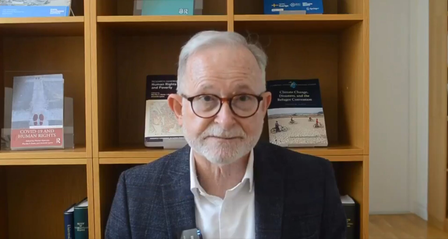
Richard Bennett, the UN Special Rapporteur on human rights in Afghanistan, has called on the Taliban to release all detained journalists immediately and unconditionally. He emphasized the importance of ensuring that media workers can carry out their duties without fear of reprisal. Bennett expressed concerns over the erosion of press freedom in Afghanistan since the Taliban regained power in 2021.
The UN expert highlighted the severe constraints faced by independent reporting in Afghanistan. Journalists and media workers operate in a restrictive and hostile environment, facing censorship, surveillance, and legal restrictions imposed by the de facto authorities. This includes controls under the law on the promotion of virtue and prevention of vice.
Bennett noted that a climate of fear has led to widespread self-censorship, extending beyond journalists to their sources. Afghans speaking to the media have reportedly encountered threats, surveillance, and detention, hampering the flow of information. Routine reporting poses serious risks, especially when critical of the Taliban or covering sensitive issues like women’s rights.
According to the Afghanistan Journalists Centre (AFJC), at least 34 journalists were detained in 2025. Bennett also highlighted the increased challenges faced by women journalists, including discriminatory barriers and restrictions on freedom of movement and dress codes. He expressed concerns about the unequal treatment of women journalists compared to their male counterparts.
The UN expert raised alarms about declining international support affecting Afghan media. He stressed the importance of increased funding and technical assistance for independent media organizations. Bennett called on the international community to support Afghan journalists, advocate for press freedom, and ensure protection mechanisms for those at risk. On World Press Freedom Day, he emphasized the pivotal role of a free and independent press in upholding human rights and shaping Afghanistan’s future.
