


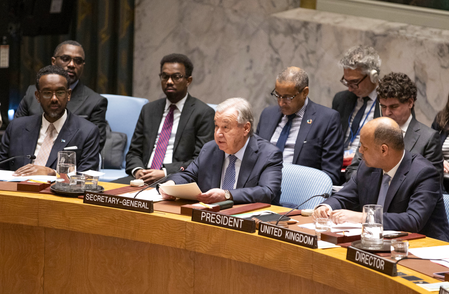
The United Nations, under Secretary-General Antonio Guterres, has established a task force to tackle the humanitarian consequences of the Strait of Hormuz crisis. The group, led by Under-Secretary-General Jorge Moreira da Silva, aims to create mechanisms to ensure the flow of essential fertilizers and raw materials to prevent an agricultural crisis in the region.
The focus of the task force is to develop technical solutions tailored to meet the humanitarian needs arising from the situation in the Strait of Hormuz. The Food and Agriculture Organization has highlighted the broader impact of the crisis, warning of significant implications on food security, agricultural production, and global markets beyond just oil disruptions.
FAO Chief Economist Maximo Torero emphasized the critical role of the strait in global agrifood systems, noting that around 30% of internationally traded fertilizers, as well as gas and oil needed for fertilizer production, pass through this strategic waterway. The UN task force will leverage its experience in establishing international structures to address crises, drawing on past successes in regions like the Black Sea, Yemen, and Gaza.
The mechanism being developed by the task force will involve close collaboration with relevant member states while respecting national sovereignty and international legal frameworks. Secretary-General Guterres has engaged with key stakeholders, including Foreign Ministers from Iran, Egypt, and Pakistan, as well as Permanent Representatives from the United States and Bahrain, to garner support for the initiative.
