


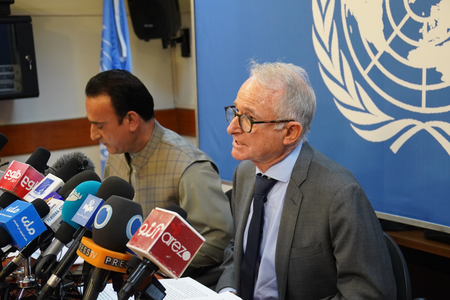
UN Special Rapporteur Richard Bennett has called for the immediate and unconditional release of journalists detained in Afghanistan. He emphasized the need for journalists to work freely without fear of arrest or harassment, especially under the current hostile environment since the Taliban took control. Bennett highlighted the challenges faced by journalists, including pressure, intimidation, and restrictions on reporting, particularly on issues like women’s rights and governance.
Bennett also expressed concerns about the plight of female journalists in Afghanistan, noting the barriers they face such as mobility restrictions and shrinking opportunities, leading many to leave the profession. Afghanistan’s press freedom ranking remains low, with the country placed 175th out of 180 nations in the 2026 World Press Freedom Index. Despite a slight improvement in the overall score, Afghanistan is still among the worst-performing countries in terms of press freedom.
The Reporters Without Borders (RSF) evaluates press freedom based on various indicators, including political, economic, legislative, social, and security aspects. Afghanistan’s rankings in these indicators show challenges in areas such as government influence over the media, financial conditions for journalism, laws impacting press freedom, societal pressures, and risks faced by journalists. The media environment in Afghanistan has significantly changed since the Taliban seized power in 2021, leading to closures of media houses and a mass exodus of journalists from the field.
RSF highlighted the impact of the Taliban’s return on press freedom, stating that the media landscape now lacks pluralism and dissenting voices. A significant number of media organizations closed within months of the Taliban’s resurgence, with many journalists forced to comply with government directives. The control over media by state bodies has increased, with journalists receiving orders from various government entities, further tightening restrictions on free reporting.
