


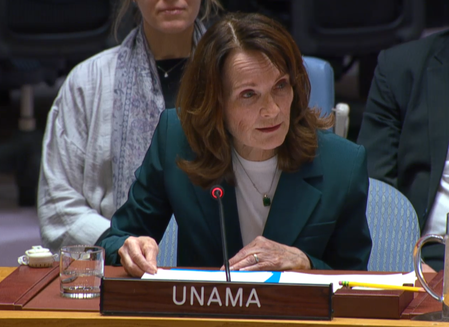
The United Nations Assistance Mission in Afghanistan (UNAMA) has raised concerns about the negative impact of restrictions imposed on women in Afghanistan. UNAMA Acting Head Georgette Gagnon criticized the Taliban for prioritizing ideological policies over the welfare of Afghan people. She highlighted that the ban on women working in humanitarian organizations is hindering aid operations and limiting assistance to vulnerable individuals.
Gagnon emphasized that the restrictions not only impede the UN’s ability to support Afghan women but also violate international rules and the UN Charter. She urged the Taliban to lift these restrictions and allow UN female staff to resume their duties. The humanitarian crisis in Afghanistan has worsened in 2026 due to reduced international funding, increased needs, and the return of migrants, exacerbated by Taliban policies.
The situation in major urban centers has become dire as economic decline and climate disasters have strained families’ coping abilities, leading to new waves of migration and displacement. Humanitarian partners have requested approximately USD 1.71 billion in 2026 to aid 17.5 million Afghans, but only a fraction of the funding has been secured so far. Taliban’s ban on Afghan women working in UN offices has severely limited aid provision to those in need.
Since assuming power in August 2021, the Taliban has enforced restrictions on women’s employment and education, further exacerbating economic challenges. The United Nations and various nations have urged the Taliban to allow women to work in humanitarian agencies as a crucial step towards Afghanistan’s reintegration into the global community. Afghanistan’s economy, already weakened by conflict and reduced aid, has left many reliant on humanitarian assistance and informal income sources for survival.
Restrictions on women’s employment and education have not only curtailed income opportunities but also deepened poverty and food insecurity in Afghanistan. The United Nations Development Programme (UNDP) highlighted the stark gender disparity in employment, with only seven percent of women working outside the home compared to 84 percent of men. The economic conditions for Afghan women remain fragile, with limited job access and increasing household vulnerabilities, underscoring the pressing need for sustainable solutions.
