


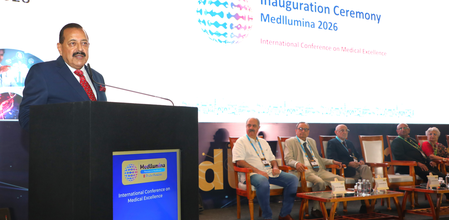
Union Minister of State for Science and Technology, Dr. Jitendra Singh, highlighted the transformative impact of artificial intelligence (AI) on medical diagnosis. At a medical conference, he emphasized AI’s role in enhancing precision and personalized treatment by minimizing subjectivity in diagnoses. Dr. Singh explained that AI tools can identify crucial details in medical data that may be overlooked by human judgment, thereby reducing errors and improving accuracy.
In traditional diagnosis, doctors heavily rely on personal experience and subjective judgment. However, AI-powered systems can pinpoint specific areas of concern in medical scans, enhancing diagnostic efficiency. By analyzing comprehensive patient data, AI tools can detect significant findings that might otherwise be missed, leading to more robust diagnoses and better treatment outcomes.
Dr. Singh stressed the importance of interdisciplinary collaboration in modern medicine, emphasizing the need for dialogue across various fields like medical technology, engineering, and data sciences. He noted the evolution of diagnostic tools from basic bedside learning to advanced imaging and molecular technologies, such as MRI and genomics. While AI systems now play a crucial role in supporting doctors’ decision-making, Dr. Singh highlighted that they enhance rather than replace medical expertise.
The Minister also discussed shifting disease patterns in India, attributing the spread of illnesses like diabetes and thyroid disorders across the country to lifestyle changes and urbanization. He underscored the significance of adapting to these changes and leveraging AI advancements to strengthen healthcare delivery and diagnosis.
