


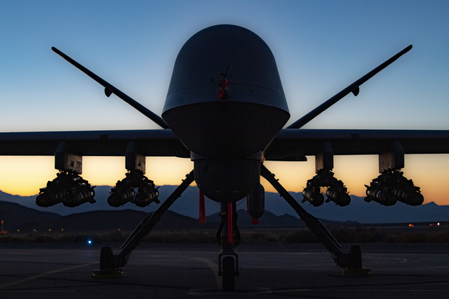
The US Air Force’s MQ-9 Reaper drones have been extensively utilized in recent operations related to Iran, as highlighted by senior Air Force officials. These officials emphasized the crucial role played by the unmanned aircraft in enhancing combat missions across the Middle East. During Operation Epic Fury, General Kenneth Wilsbach, Air Force Chief of Staff, underscored the significance of the MQ-9 in operational success.
Wilsbach noted the unparalleled value of the MQ-9 in these operations, emphasizing its effectiveness through numerous strikes. The Department of the Air Force defended its proposed budget for FY2027 before Congressional committees, emphasizing the growing importance of unmanned systems and readiness in modern warfare. The MQ-9 was praised for its utility in missions while mitigating risks to pilots and crews.
Despite ongoing force modernization efforts, the Air Force affirmed its commitment to retaining the MQ-9 fleet. Air Force Secretary Troy Meink assured lawmakers that the focus was on developing future successor systems to complement manned fighters and other autonomous aircraft. Congressional leaders raised concerns about the balance between costly next-generation fighter aircraft and more cost-effective autonomous systems.
General Wilsbach highlighted the progress in developing Collaborative Combat Aircraft (CCA), autonomous systems intended to operate alongside manned fighters like the F-47, F-22, and F-35. He emphasized the successful integration of autonomous systems, showcasing their capabilities and adaptability. The Pentagon’s proposed budget includes a substantial allocation for Collaborative Combat Aircraft (CCA) development, aligning with the broader shift towards autonomy and advanced battle management systems.
